Development
Research


Client
BETERRA
 United States
United States
Services
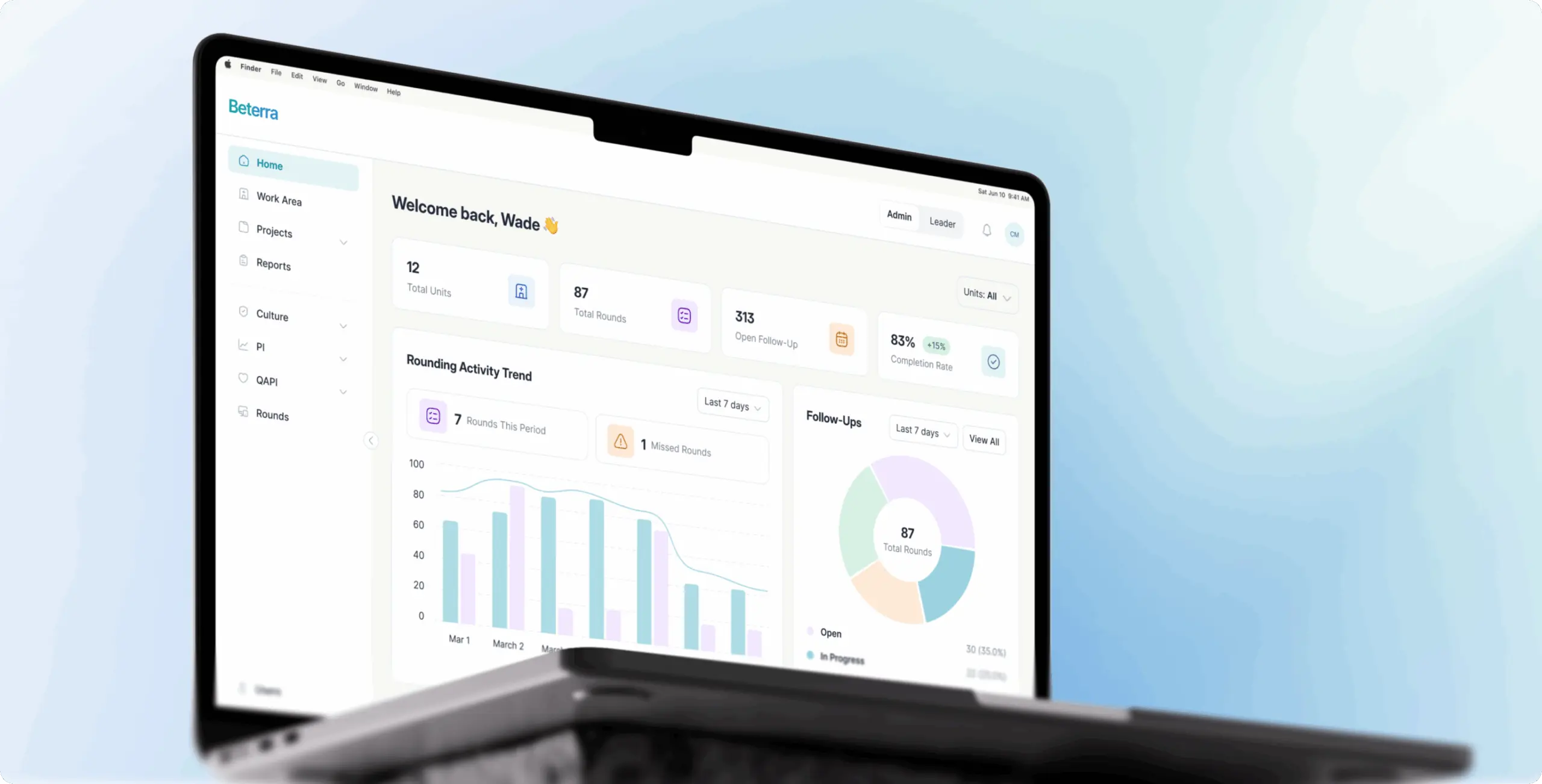
The platform needed to support growing operational complexity across hospitals, departments, and staff roles while maintaining a familiar experience for existing users. Different permission levels required clearly structured access management, task visibility, and workflow ownership across units and organizations.
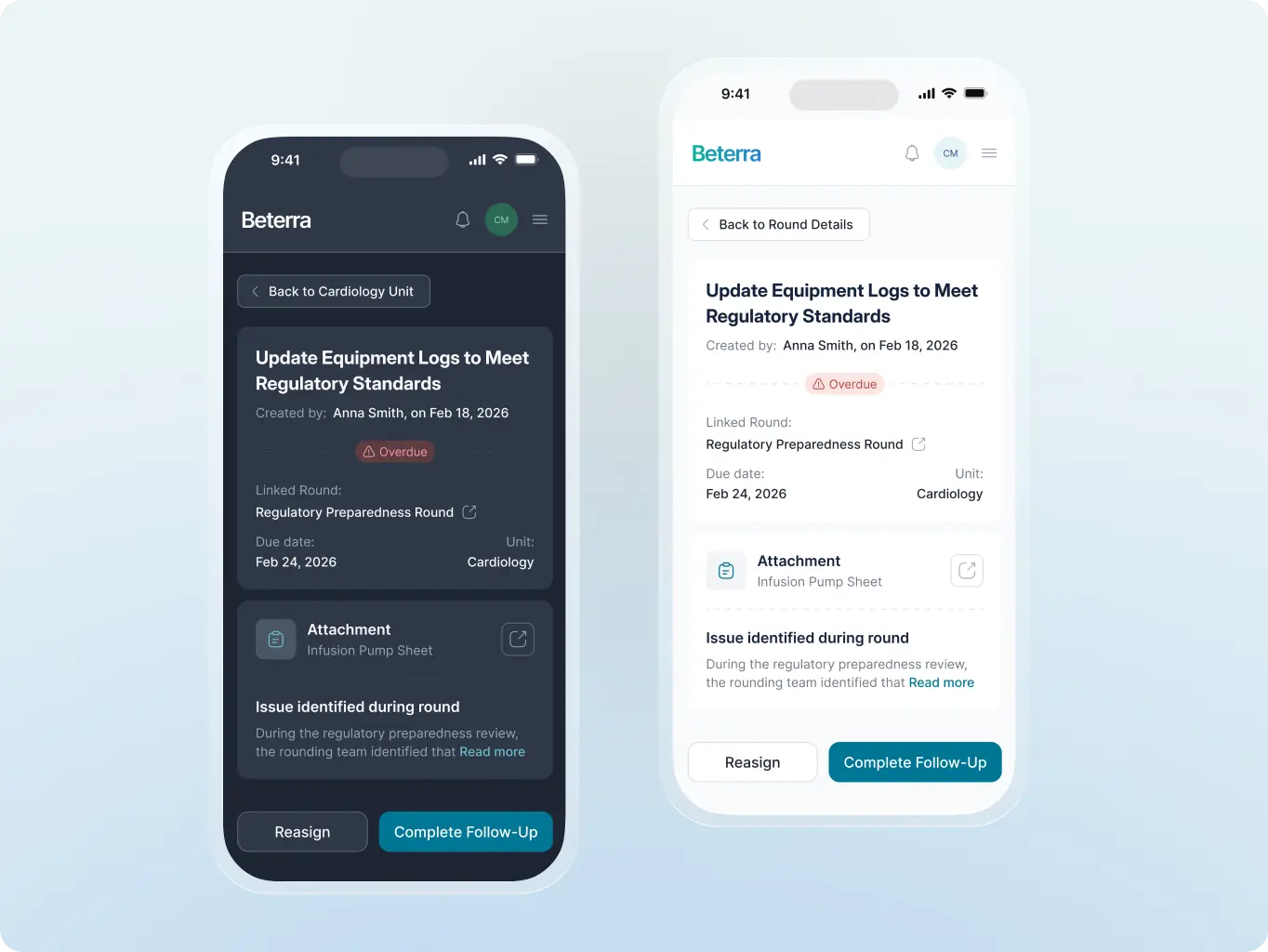
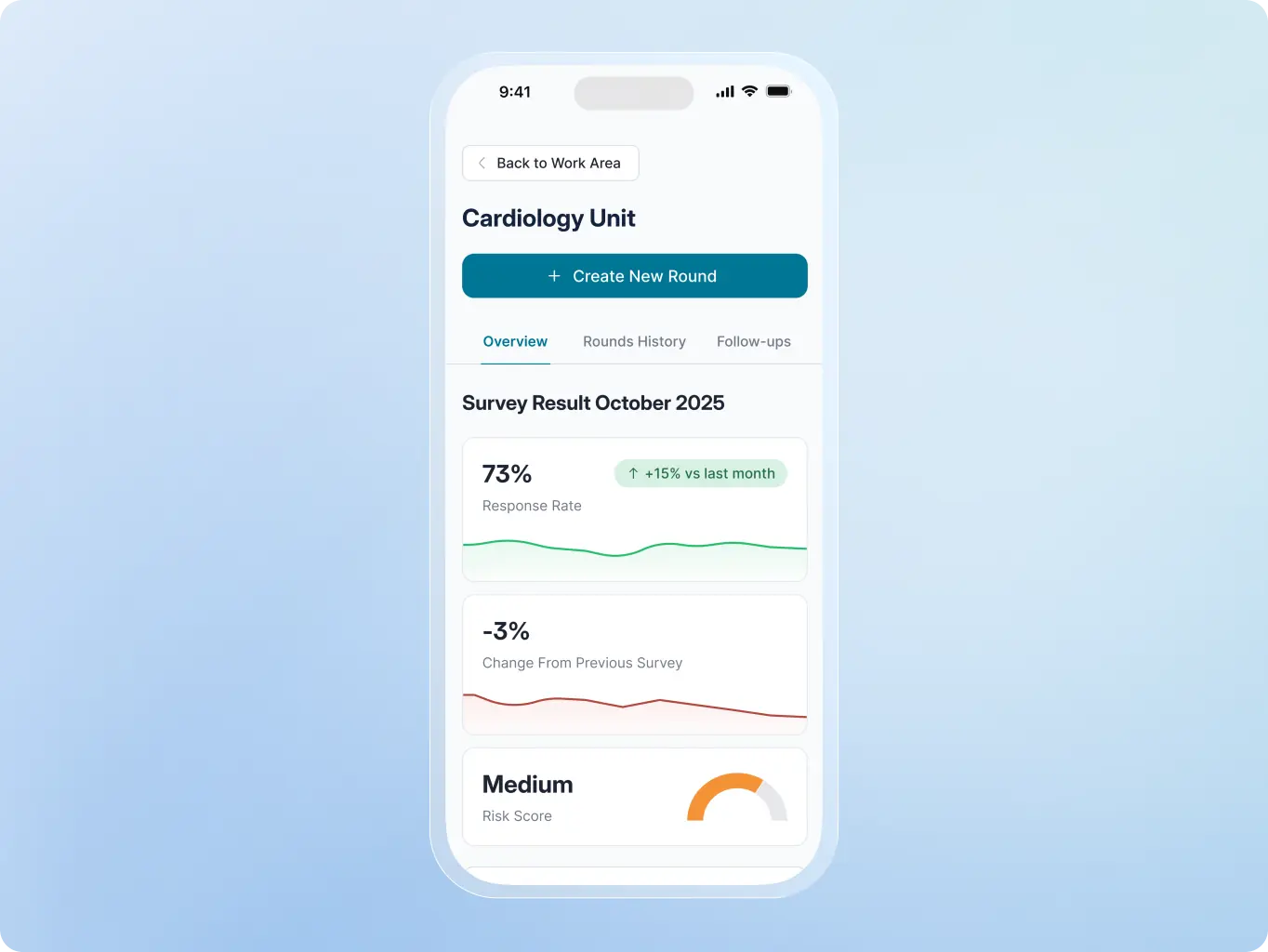
A major business requirement was improving mobile efficiency for staff performing Rounds in real hospital environments. Since most workflows happened on mobile devices while moving between rooms and departments, the product needed faster interactions, clearer task progression, and simplified data input without compromising administrative control or reporting capabilities.
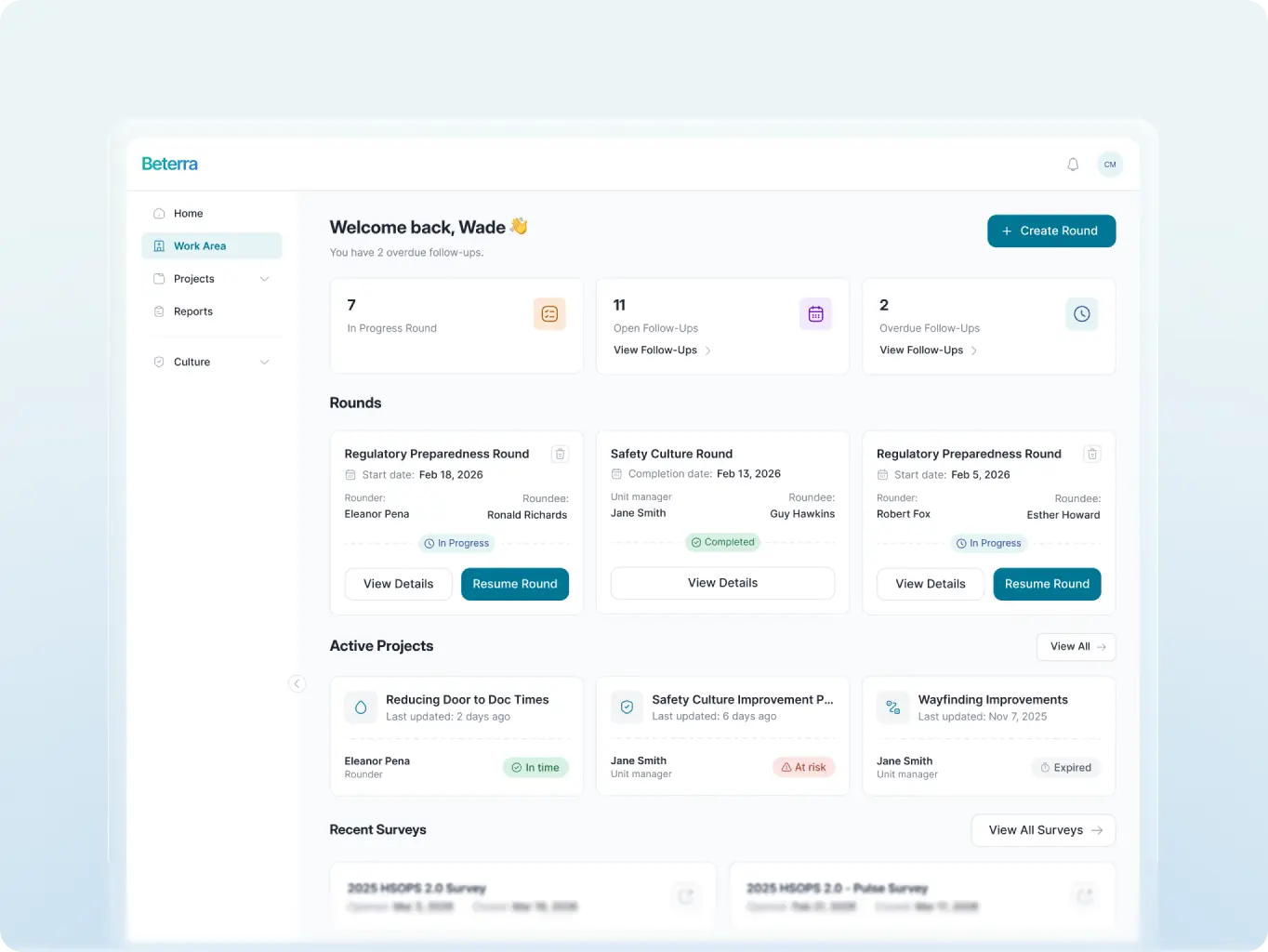
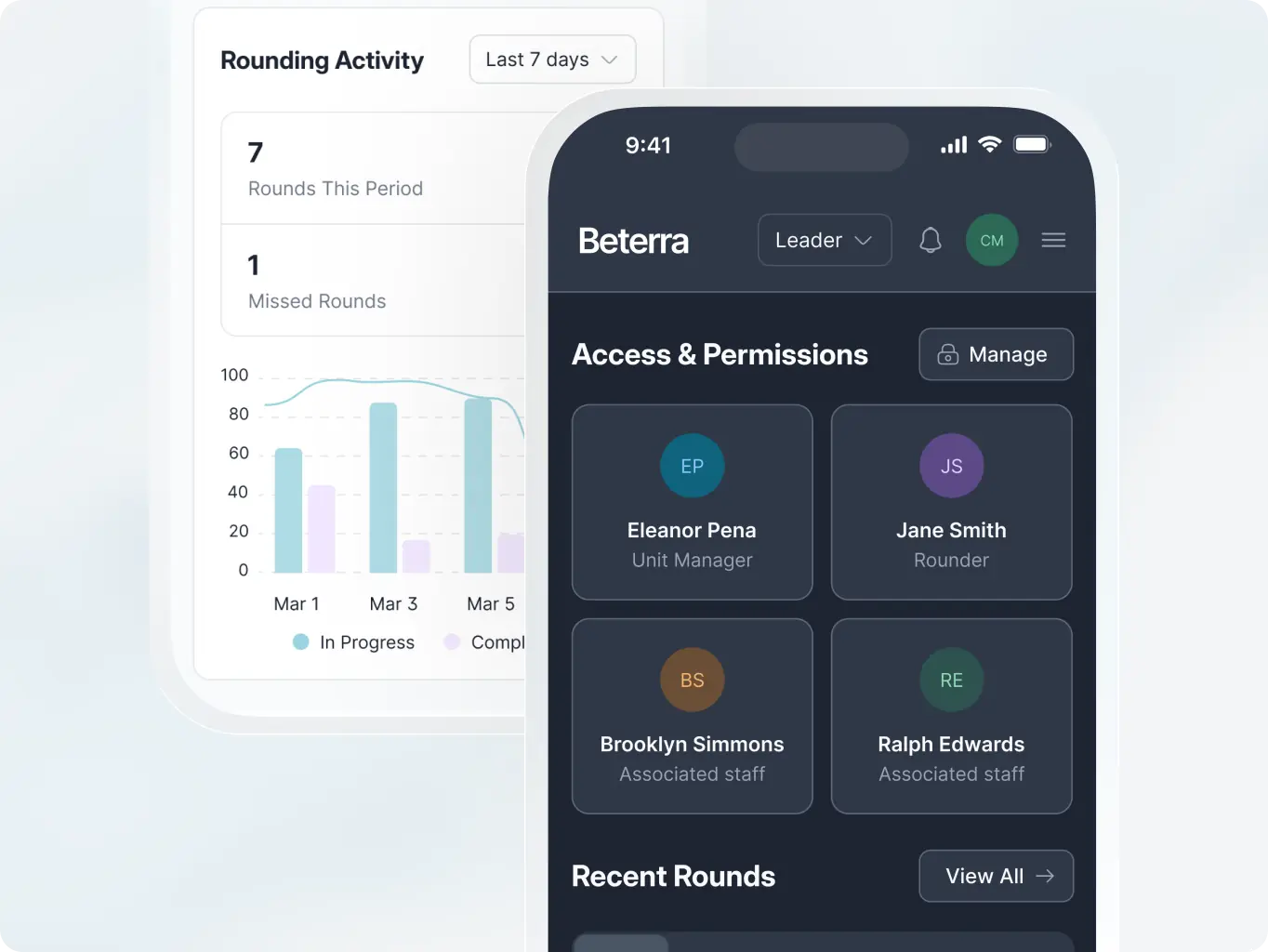

The research phase focused on understanding how different hospital teams interacted with the platform during operational Rounds, follow-up management, and administrative oversight. Since workflows varied significantly between staff roles, department managers, and global administrators, it was essential to map permission structures, task ownership, and information priorities across the system.
We also analyzed real mobile usage scenarios to identify friction points during fast-paced hospital workflows. This helped define clearer interaction patterns, improve form completion speed, simplify navigation depth, and optimize task management for users operating directly within clinical environments.
Stages
- information architecture
- Userflows
We rebuilt the platform structure around 6 distinct user roles with different responsibilities, permissions, and levels of access – ensuring that each user saw only the tools, data, and actions relevant to their workflow.
This resolved navigation inconsistencies across hospitals, units, and administration levels while integrating the new functionality into the existing system without disrupting operational processes.
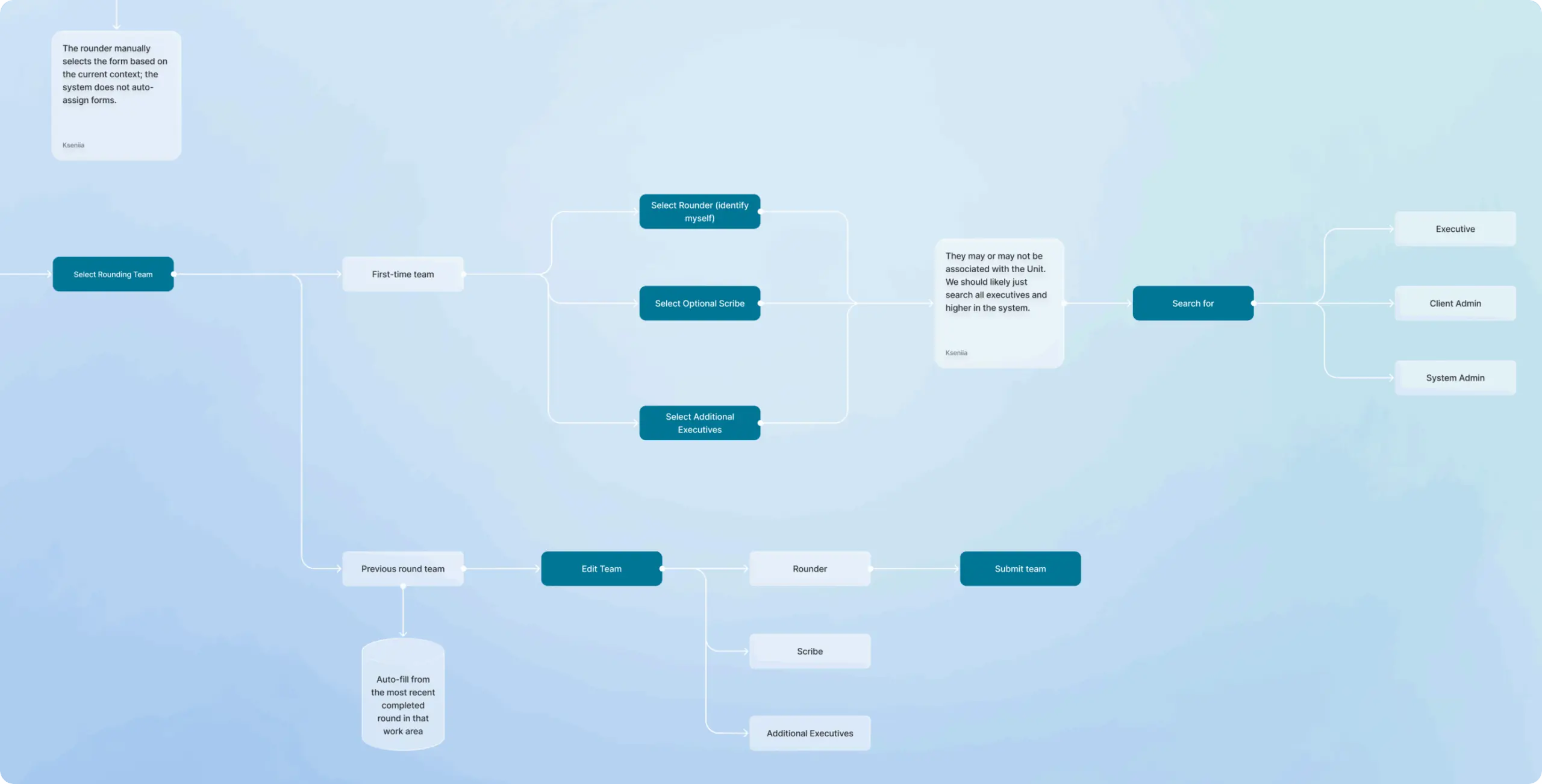
We redesigned the core workflows to reduce unnecessary actions, clarify next steps, and make task completion faster across mobile and desktop environments.
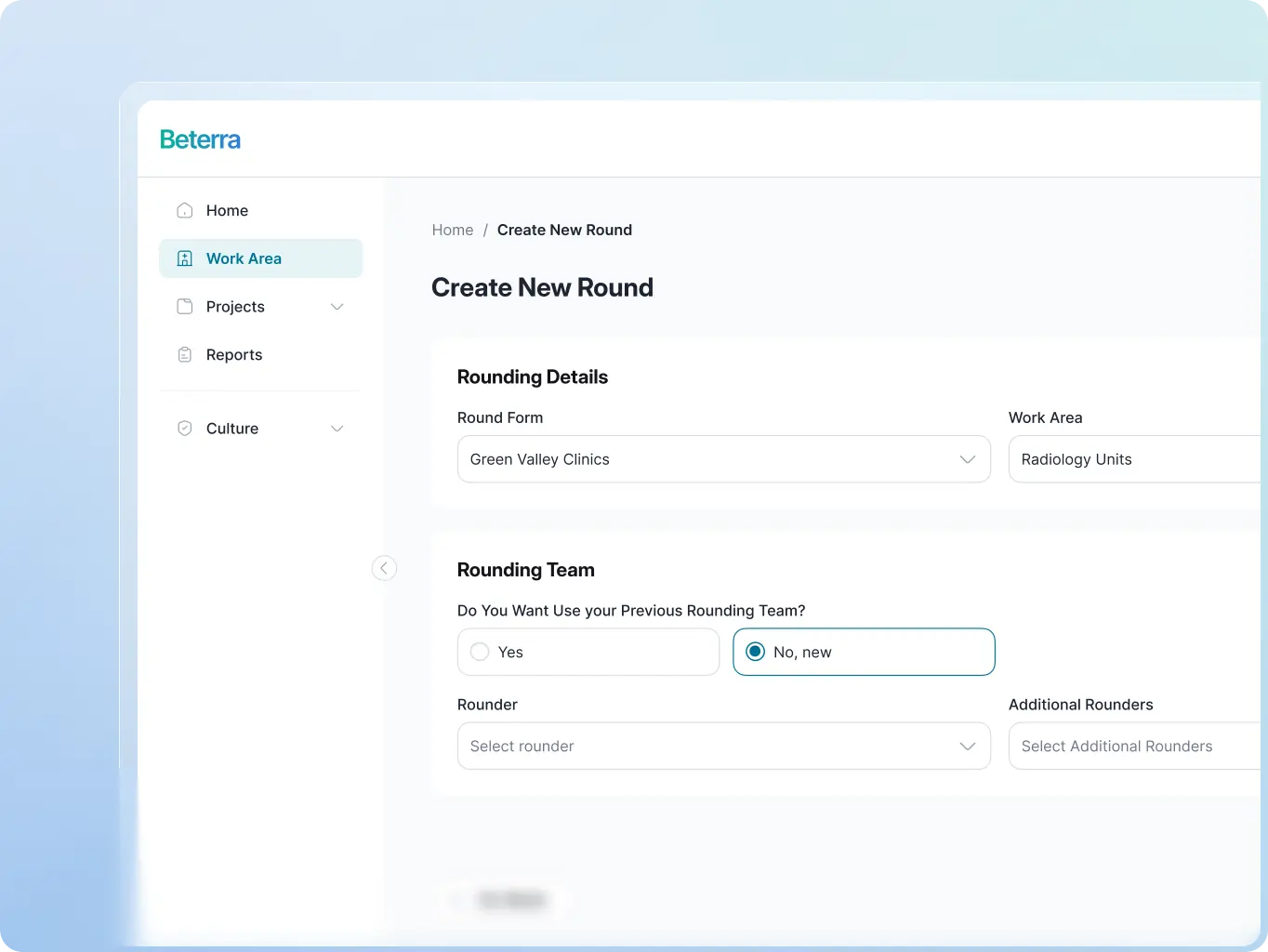
Complex processes like conducting Rounds, assigning follow-ups, and tracking issue resolution were streamlined into more logical flows, improving operational efficiency and reducing friction for all user roles.
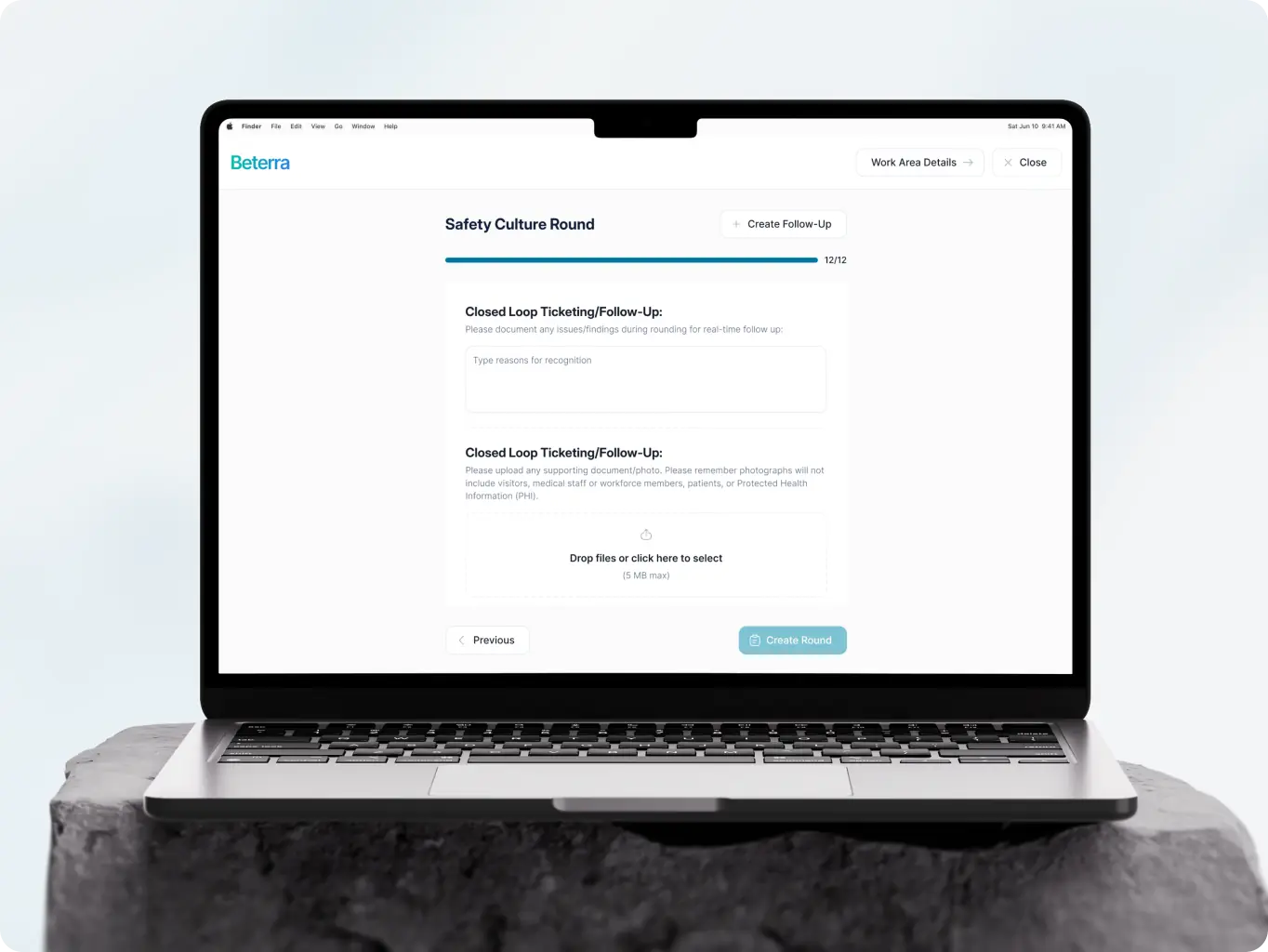
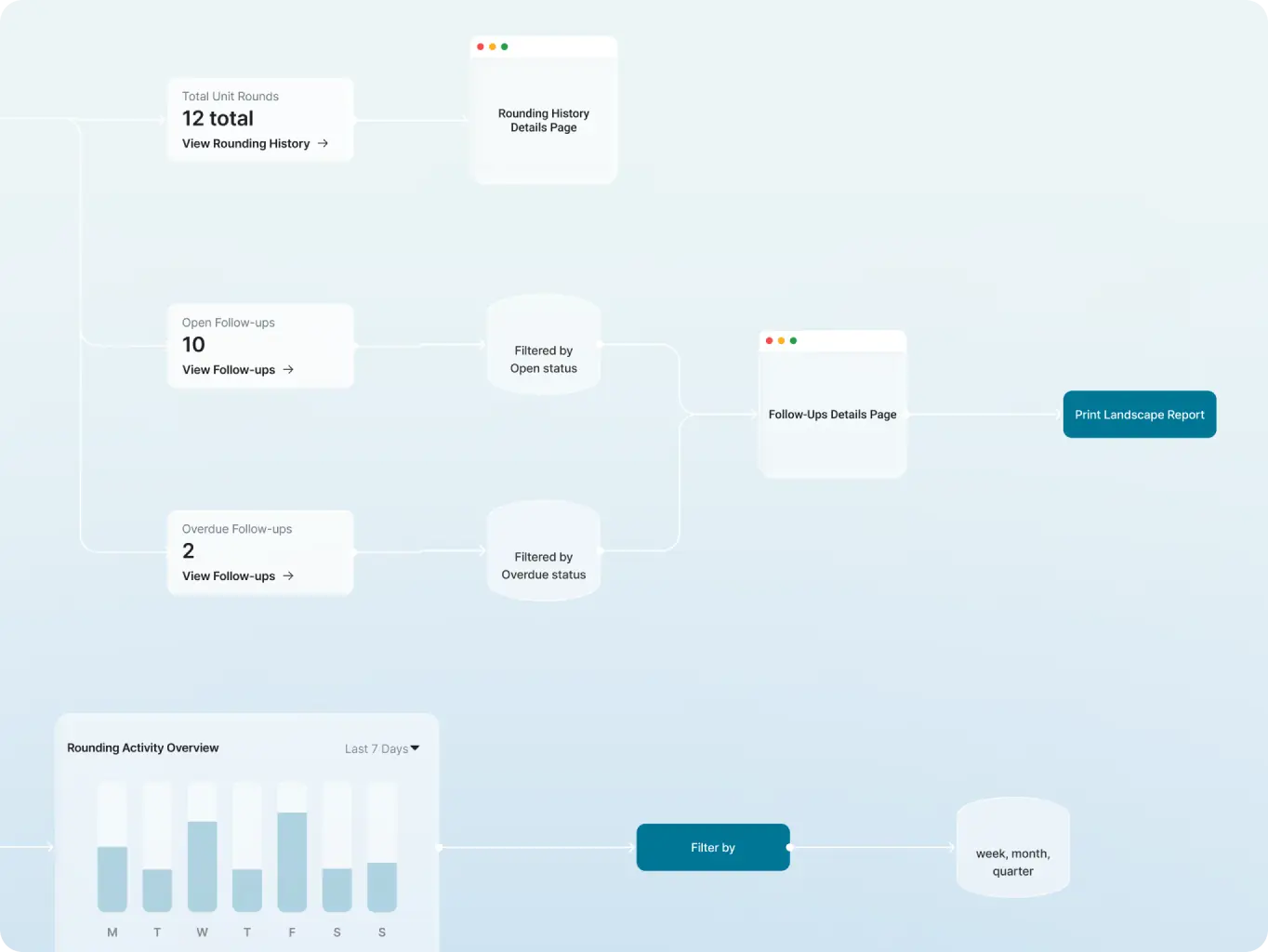
The design stage focused on integrating new functionality into the existing platform while improving usability, workflow clarity, and interaction consistency.
Since the product was already actively used across hospitals, the challenge was to evolve the experience without introducing disruptive visual or structural changes for staff and administrators.
Stages
- ui kit
- UI Design
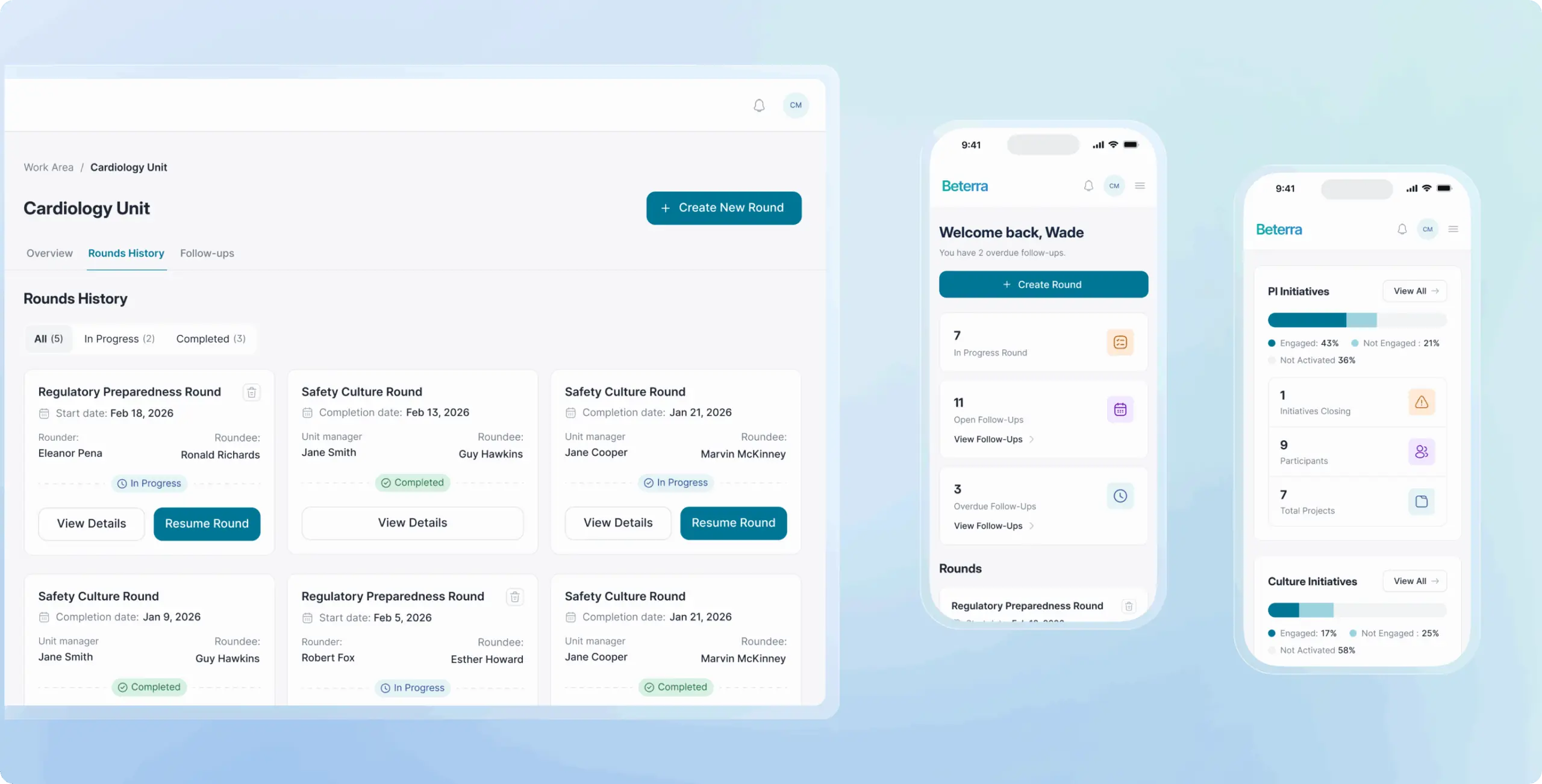
We restructured and expanded the existing design system, transforming scattered files, inconsistent patterns, and outdated components into a unified product ecosystem the entire team could reliably use.
The updated system introduced scalable components, standardized behaviors, and mobile-first interaction patterns that improved collaboration, accelerated feature development, and maintained consistency across all workflows and user roles.
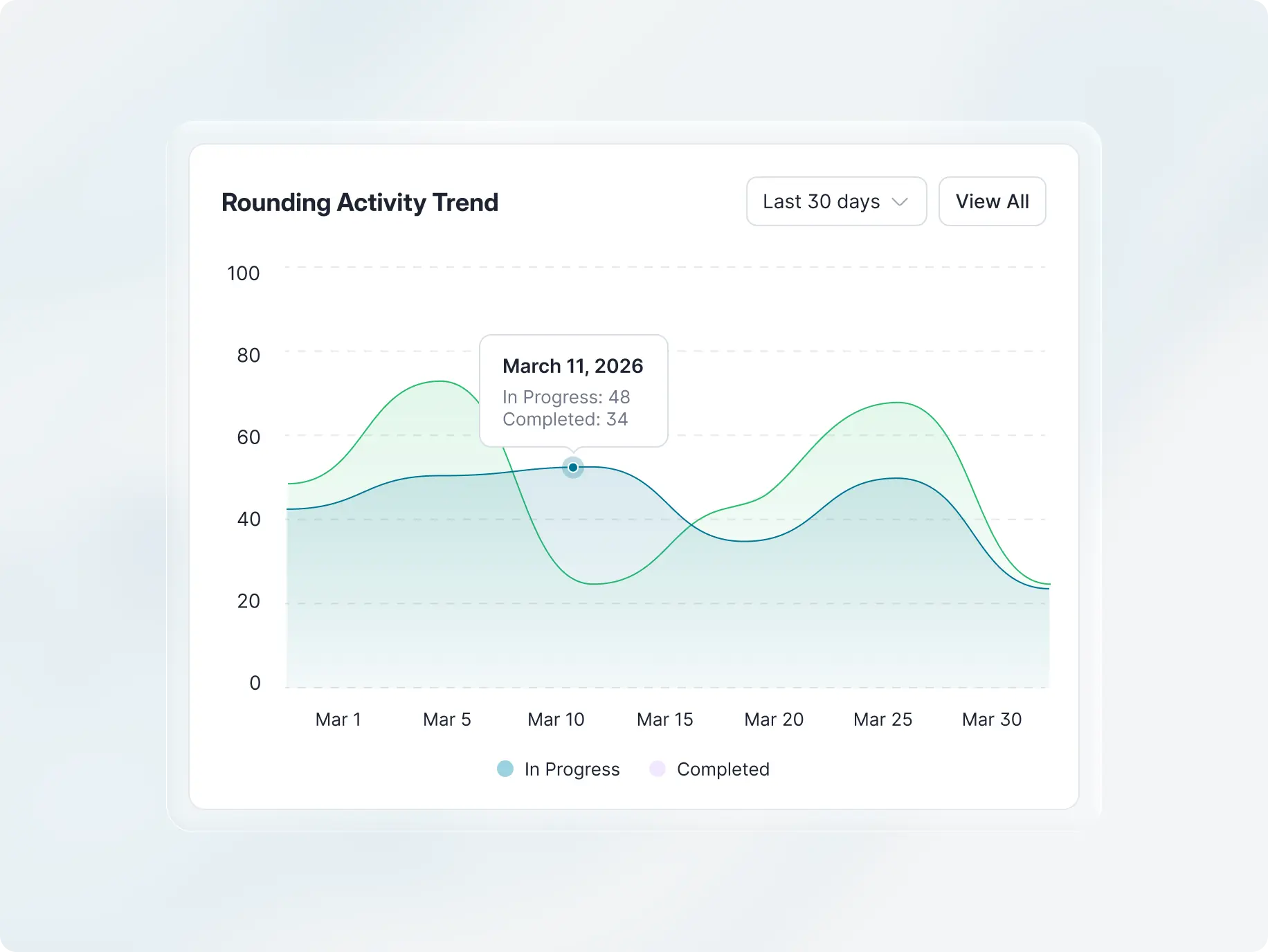
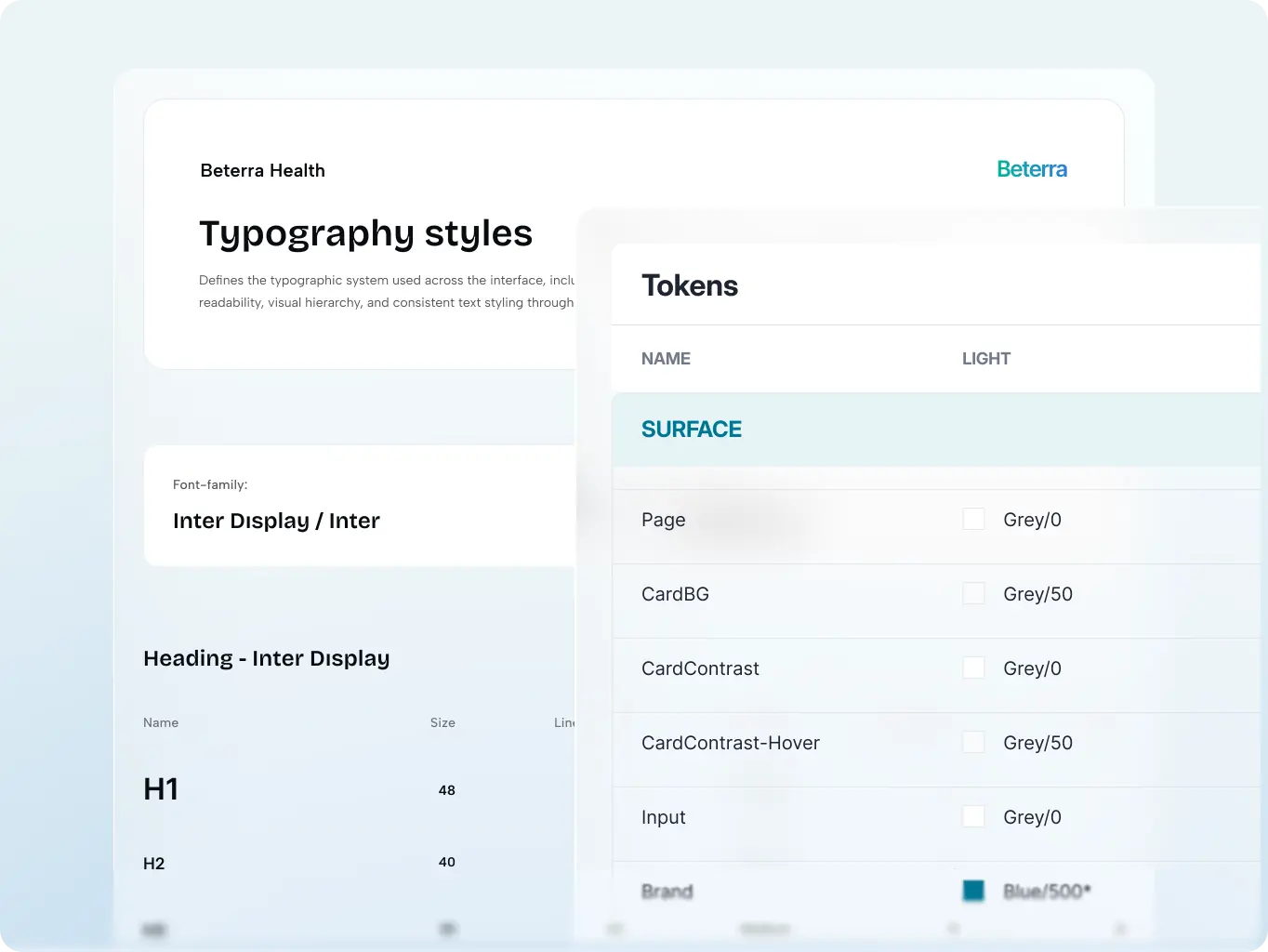
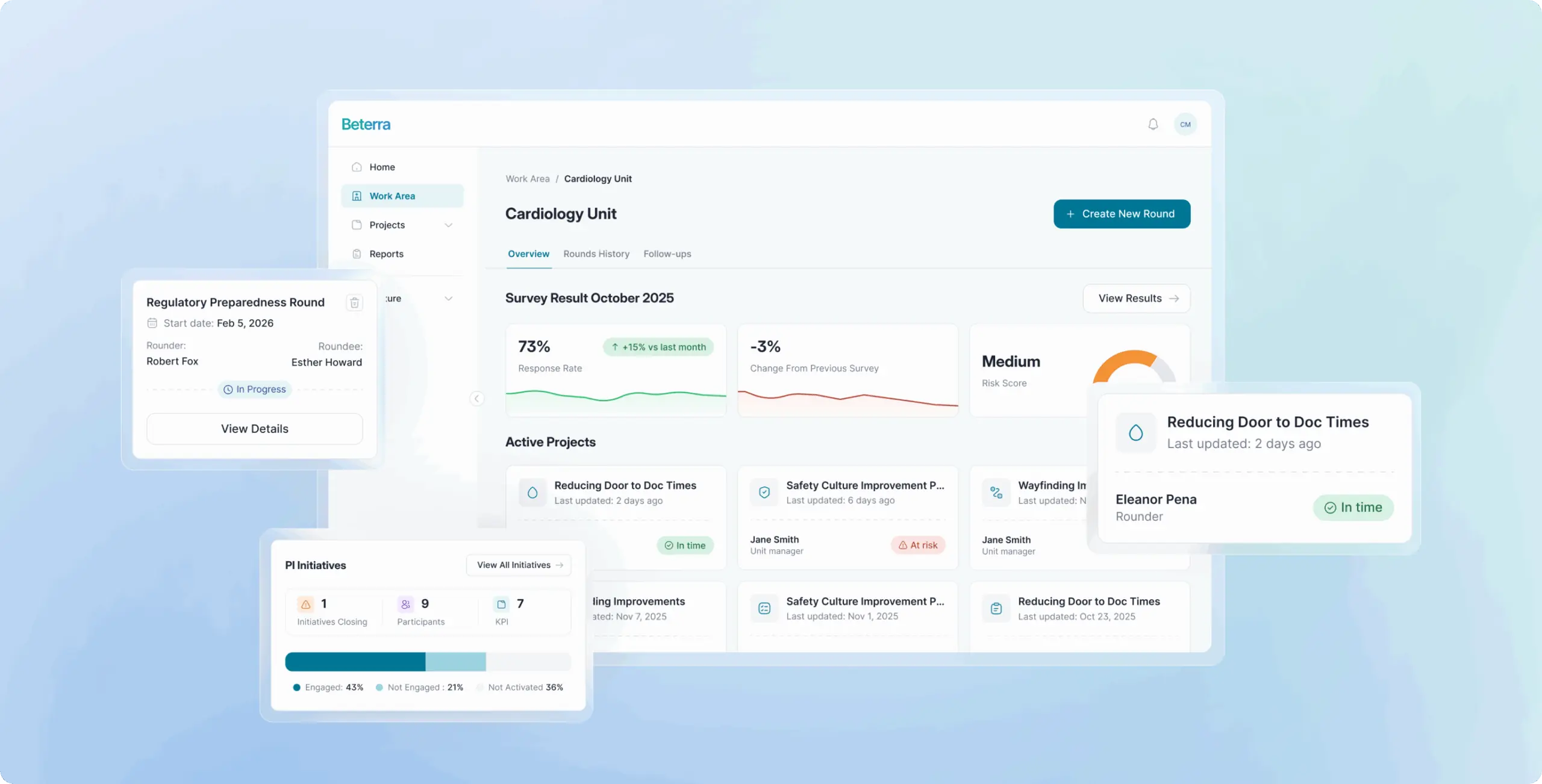
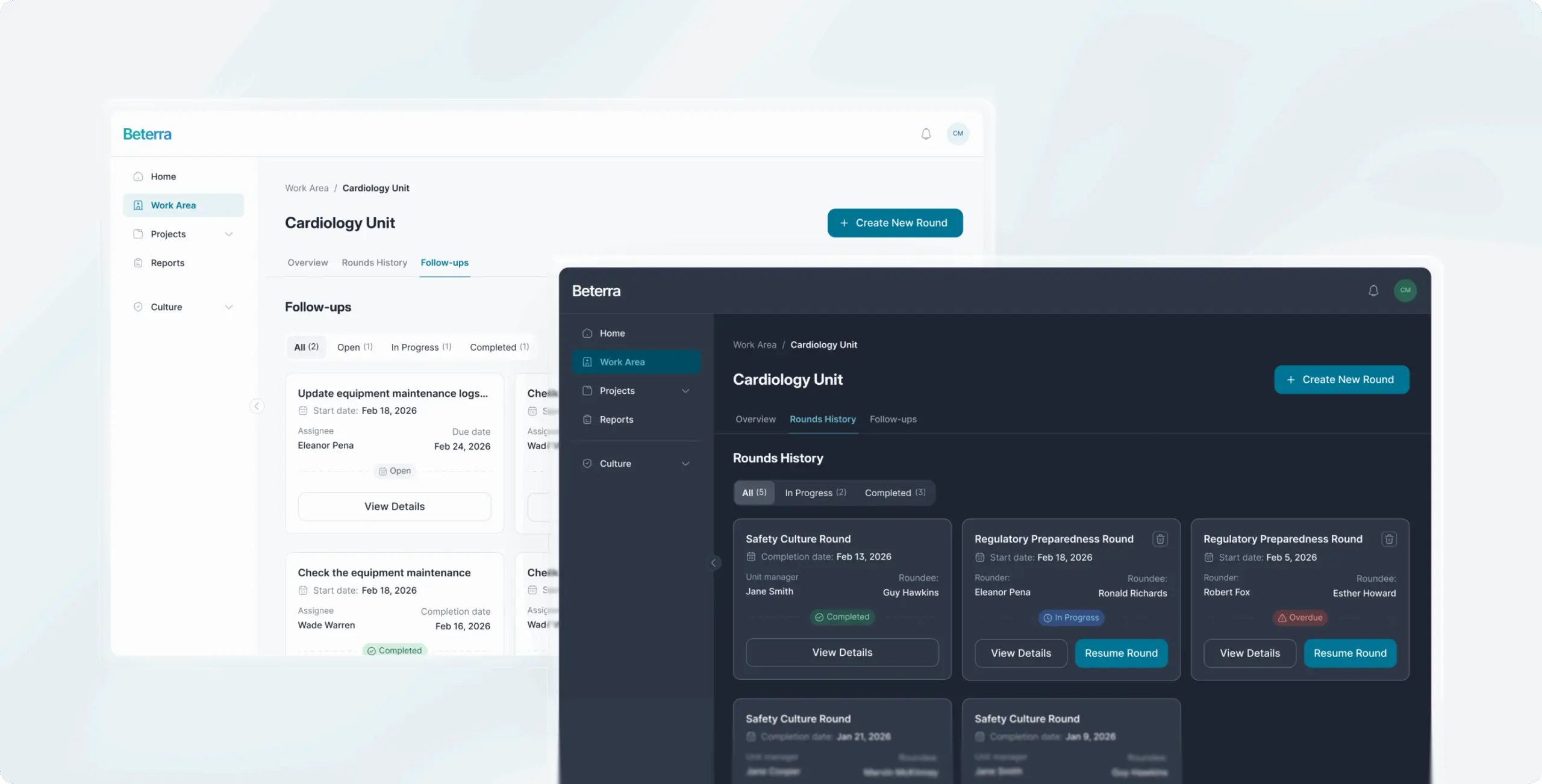
A major product challenge was expanding the platform without breaking the existing operational structure already used across hospitals. The system contained multiple dashboards, long-form workflows, and complex administrative layers, so the UI needed to support new functionality while keeping the experience familiar for existing users.
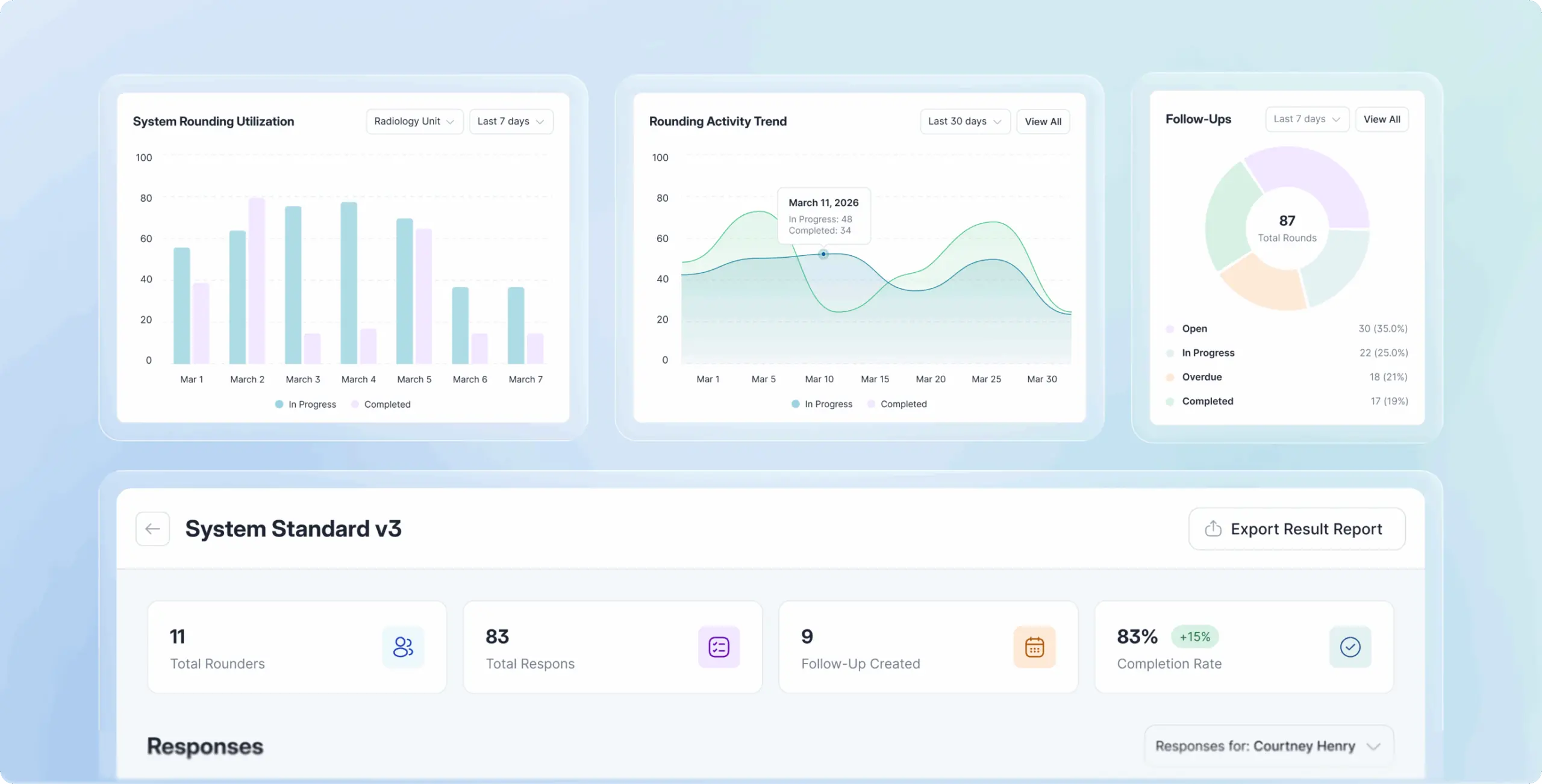
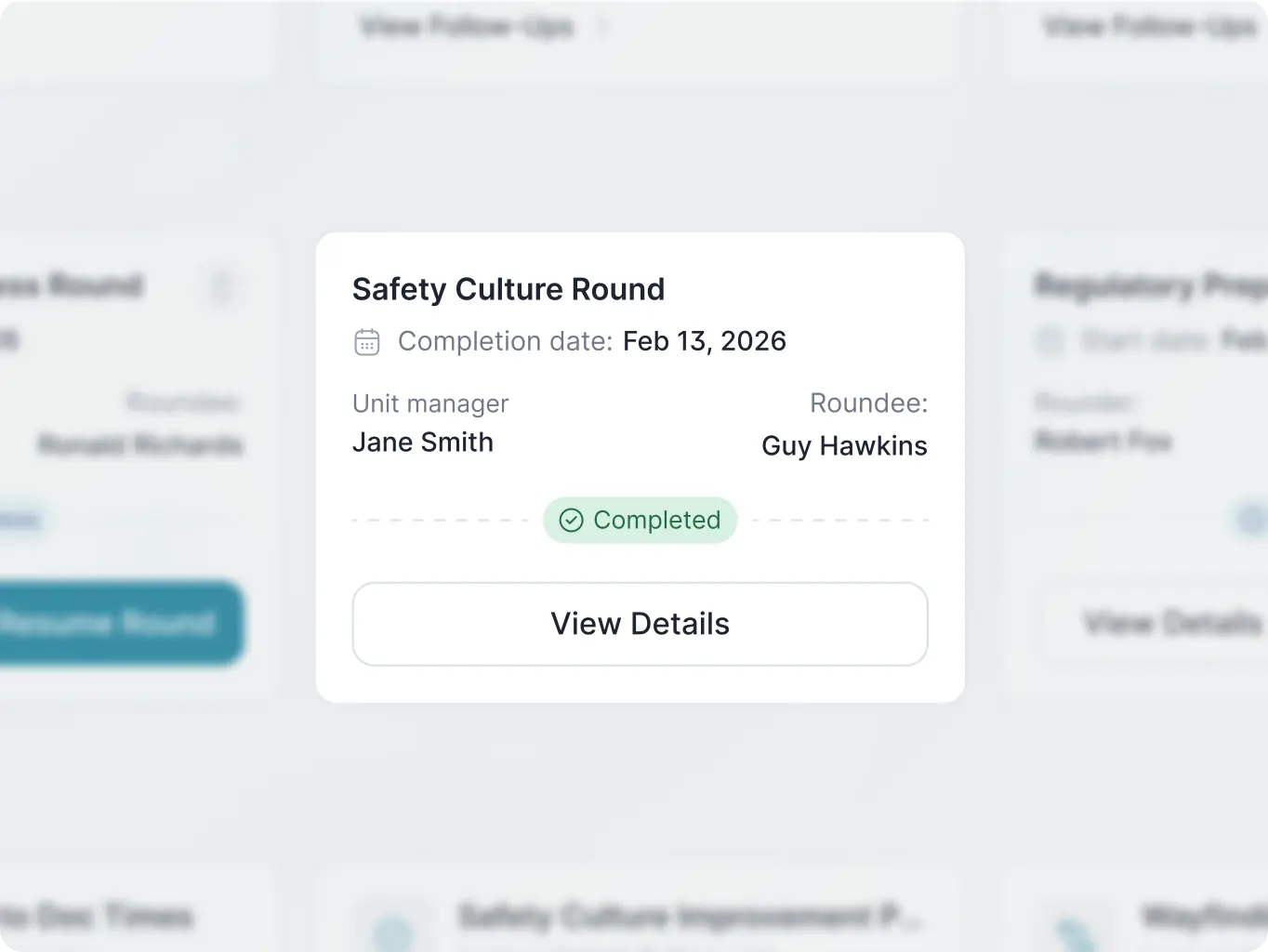
We redesigned key interface areas to improve information prioritization, simplify large operational flows, and make mobile interactions faster in real hospital environments. This included restructuring dashboards around more important actions and updates, simplifying long checklist interactions during Rounds, and reorganizing administrative screens to make complex management tasks more logical and scalable across the platform.
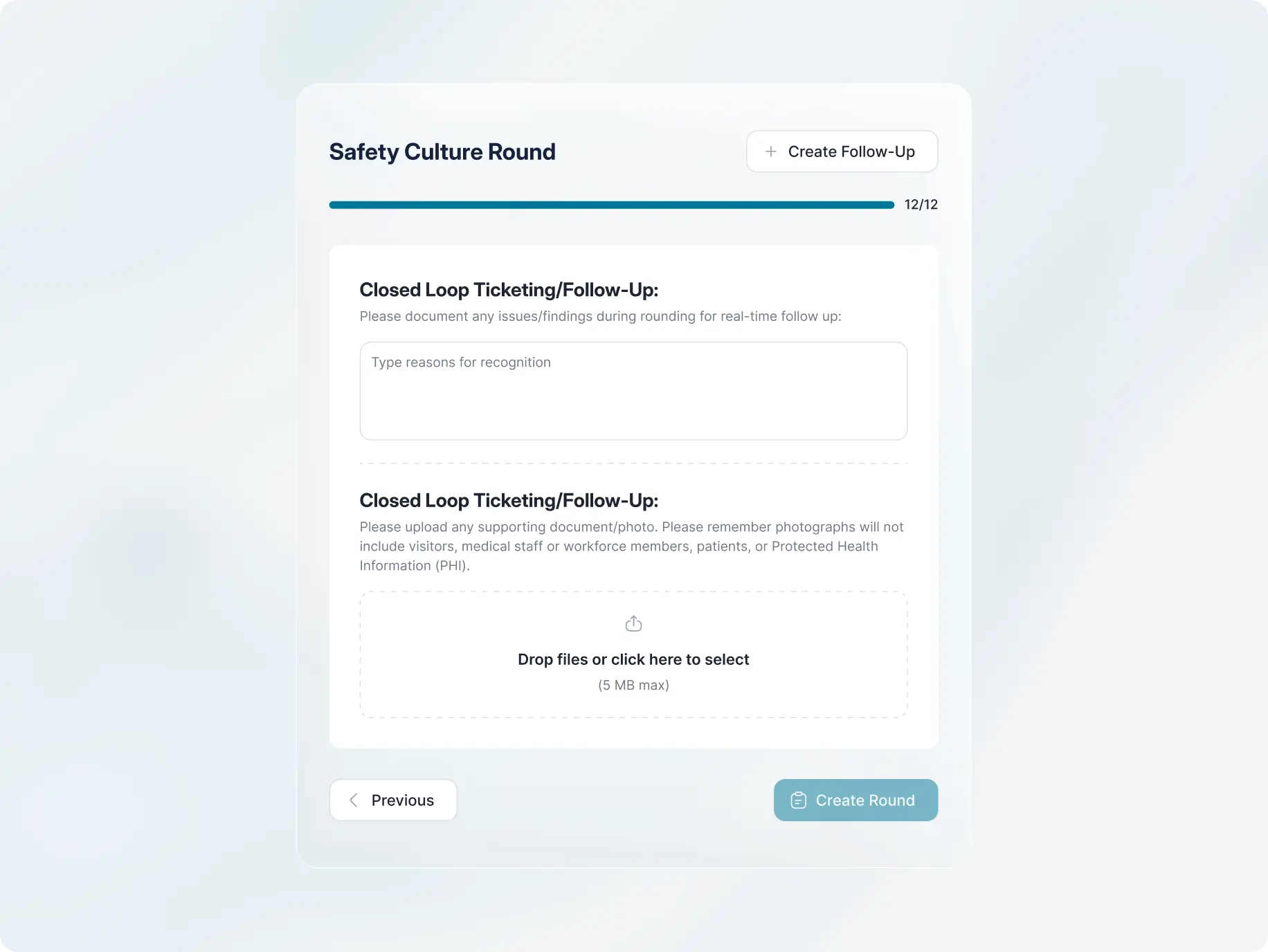
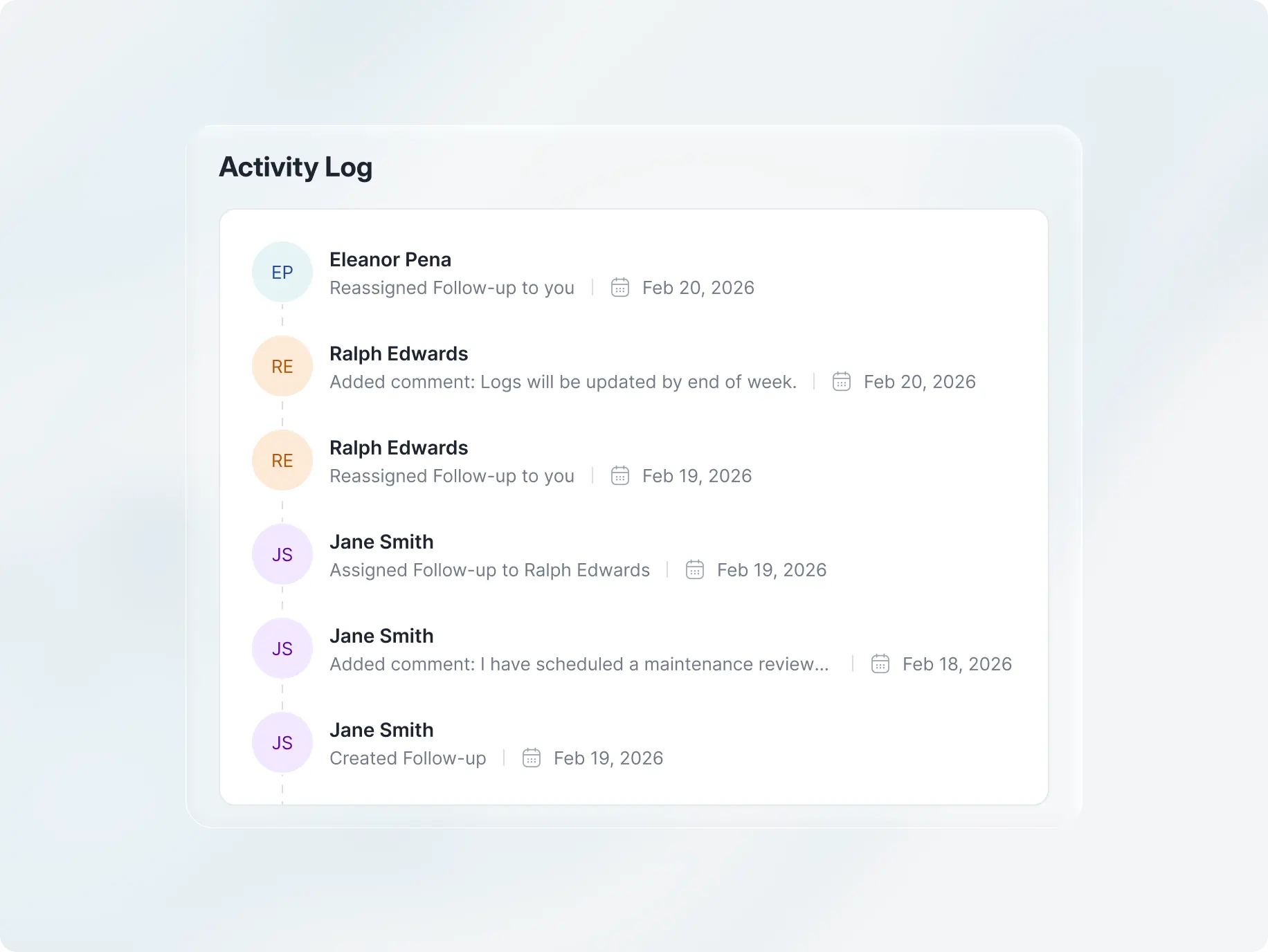
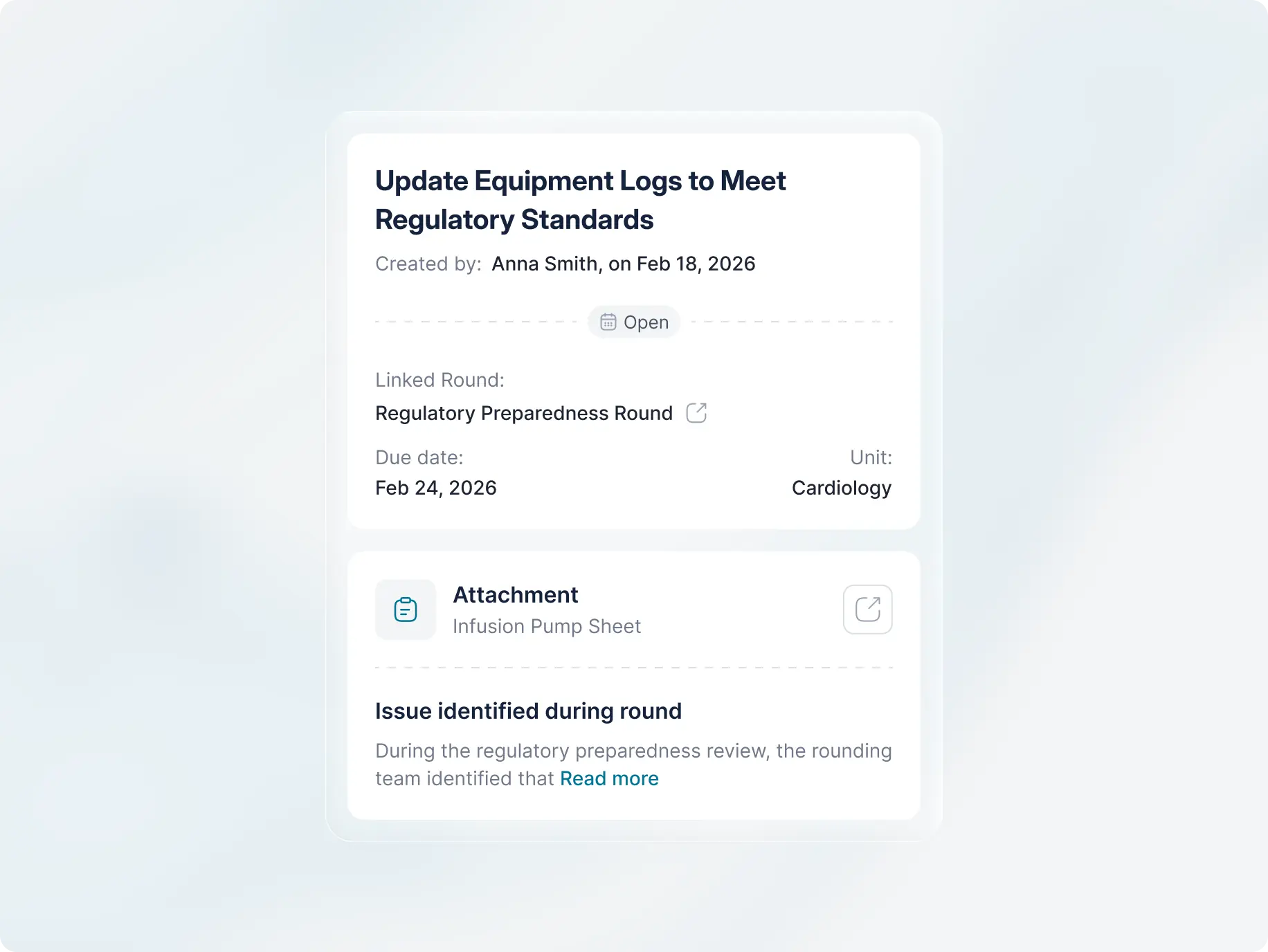
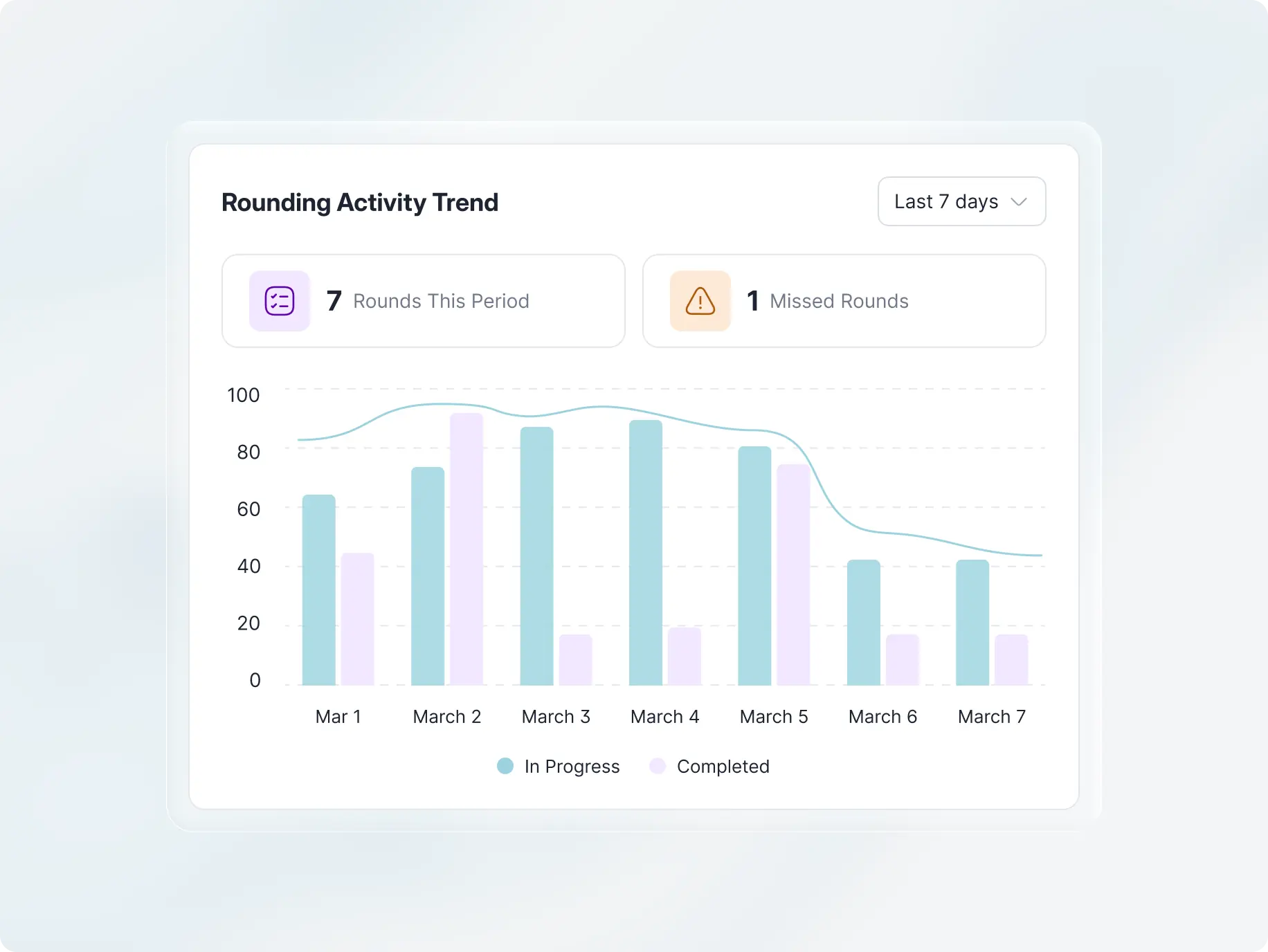
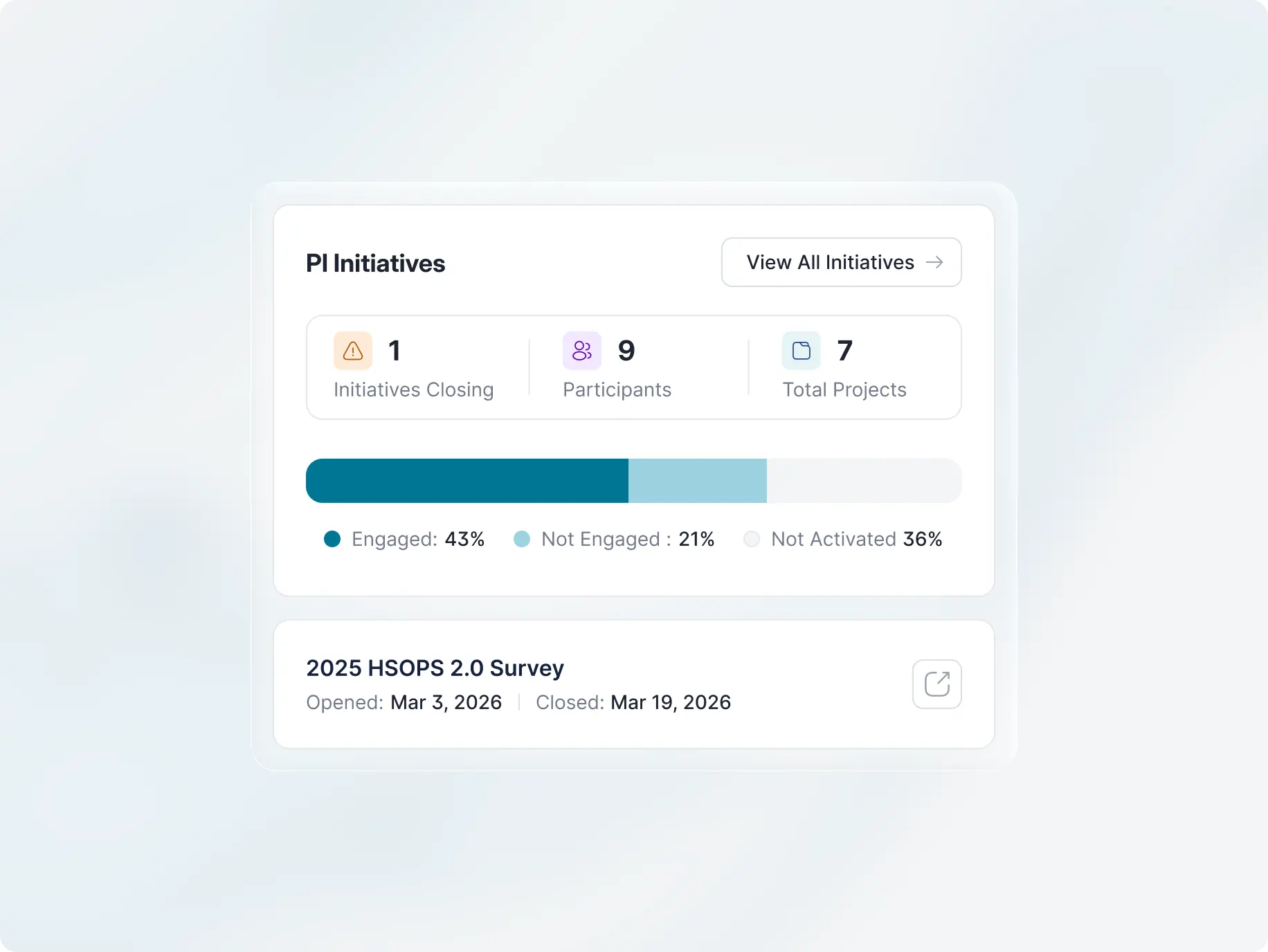
Scribe — Round documentation
Enabled Scribes to document in-person hospital Rounds digitally, capture staff conversations, and create quick follow-up tickets directly during walkthroughs.
Team Member — Task participation
Allowed frontline staff to review assigned follow-ups, participate in operational workflows, and stay aligned with ongoing unit activities and initiatives.
Assignee — Follow-up management
Helped Assignees manage quick operational fixes, track follow-up progress, and maintain accountability across hospital units and departments.
Unit Leader — Department oversight
Provided Unit Leaders with visibility into ongoing Rounds, unresolved follow-ups, and unit performance to better coordinate operational improvements.
Entity Administrator — Hospital management
Enabled hospital administrators to manage Work Areas, permissions, reporting, and operational visibility across multiple units and leadership levels.
System Administrator — Global platform control
Allowed System Administrators to oversee platform-wide workflows, standardize operational structures, and manage role-based access across all hospitals.
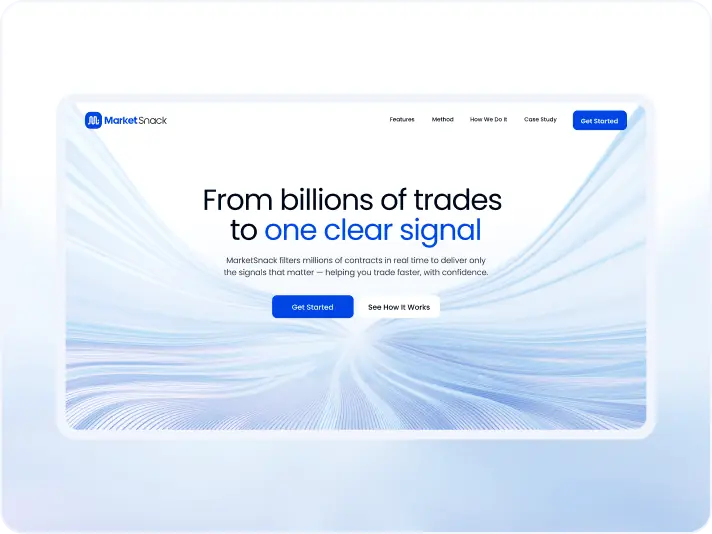
#Website redesign #Website development
marketsnack
USA
USA
#Website design #website development
EVERON
United States
United States
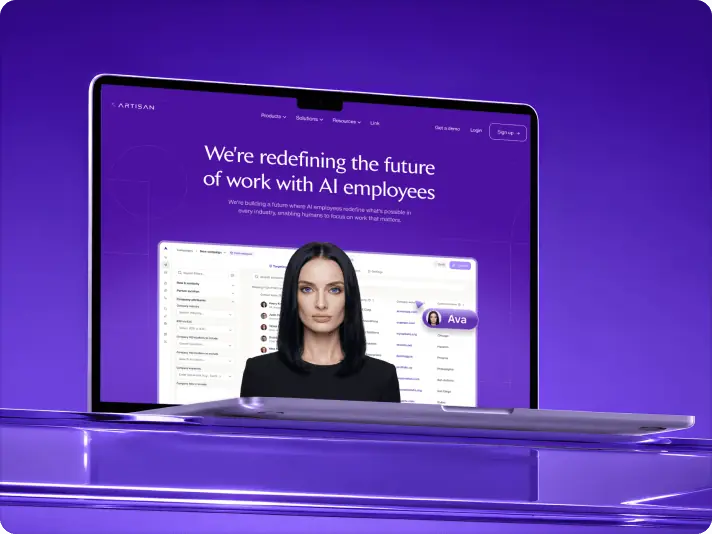
#Ux audit #website redesign
Artisan
USA
USA
Have a project in mind?
Let's chat
Have a project to
discuss?
discuss?



Have a partnership in
mind?
mind?