Development
Research


Client
EVERON
 United States
United States
Services
Website design
website development
Technologies
 webflow
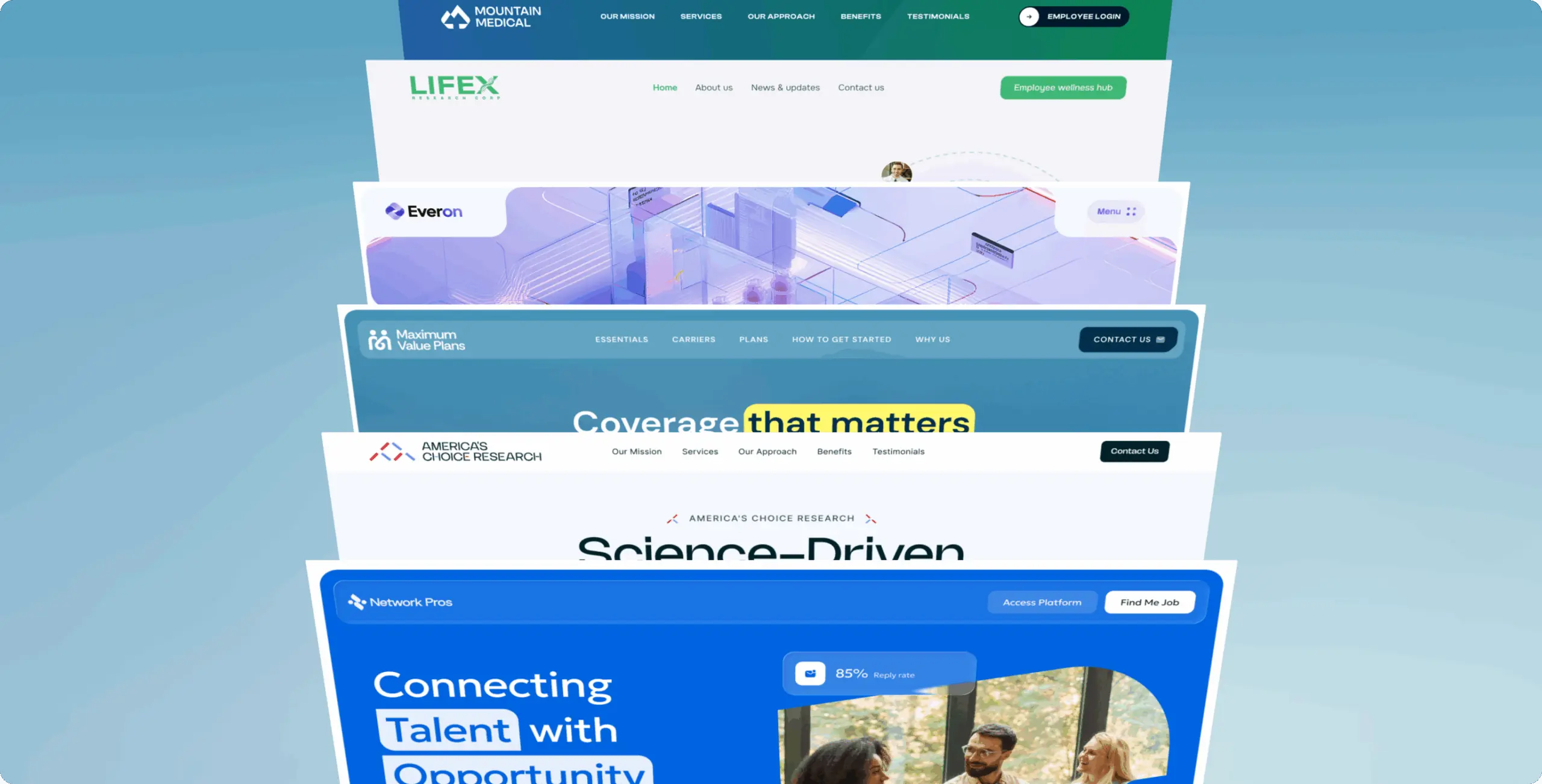
The company operates across multiple industries, where users need to quickly understand the offer and decide whether it is relevant to them. Over time, the portfolio grew organically, resulting in disconnected websites with inconsistent structure, messaging, and visual quality.
Users encountered different navigation patterns and unclear positioning across brands, which slowed decision-making and reduced trust before contact. As a result, potential customers dropped off early or submitted low-quality inquiries.
The goal was to bring all websites to a unified standard while preserving each brand’s identity. The result is a consistent digital ecosystem where users can easily navigate, understand the value, and move toward contact with less friction.
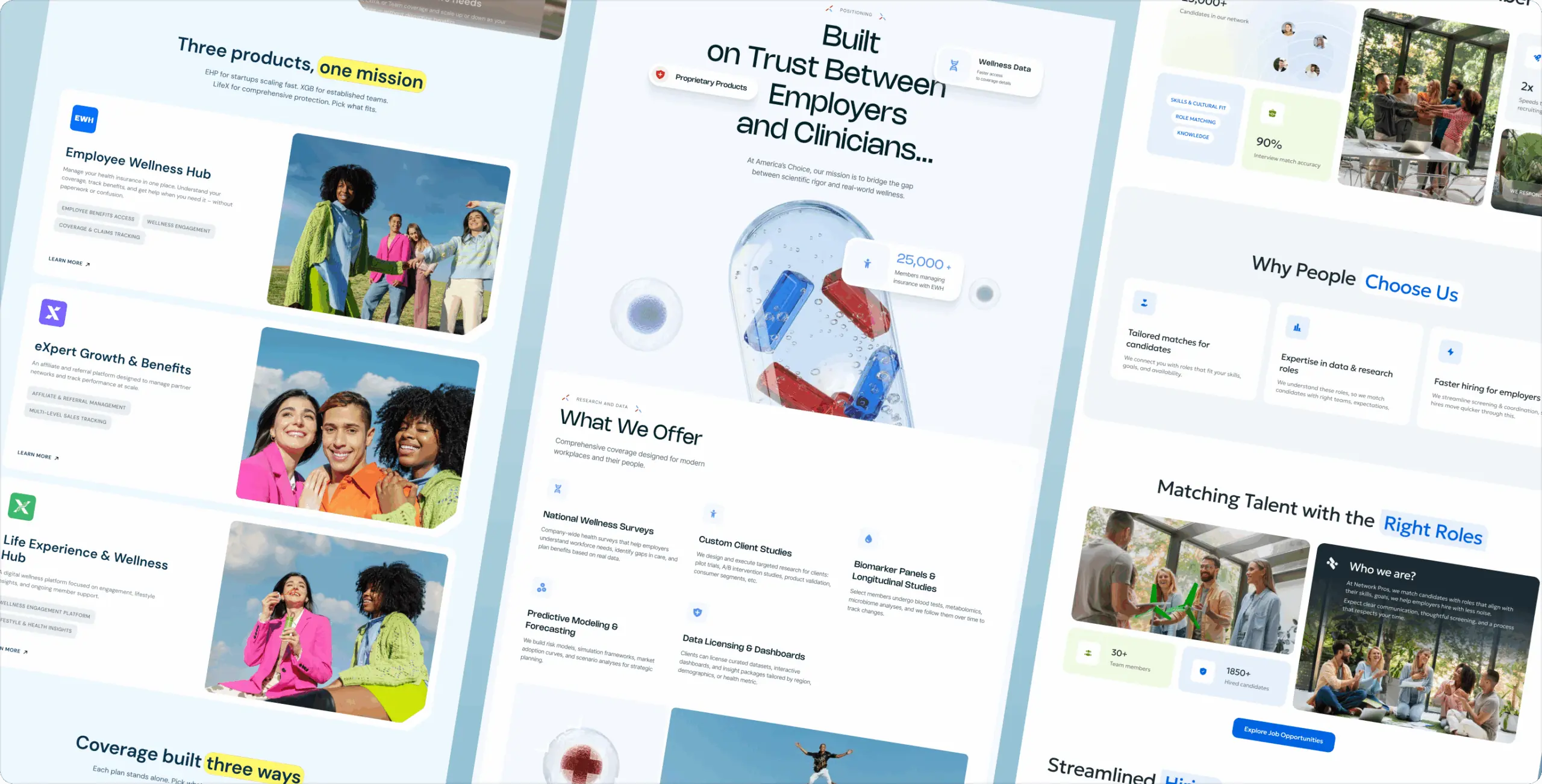

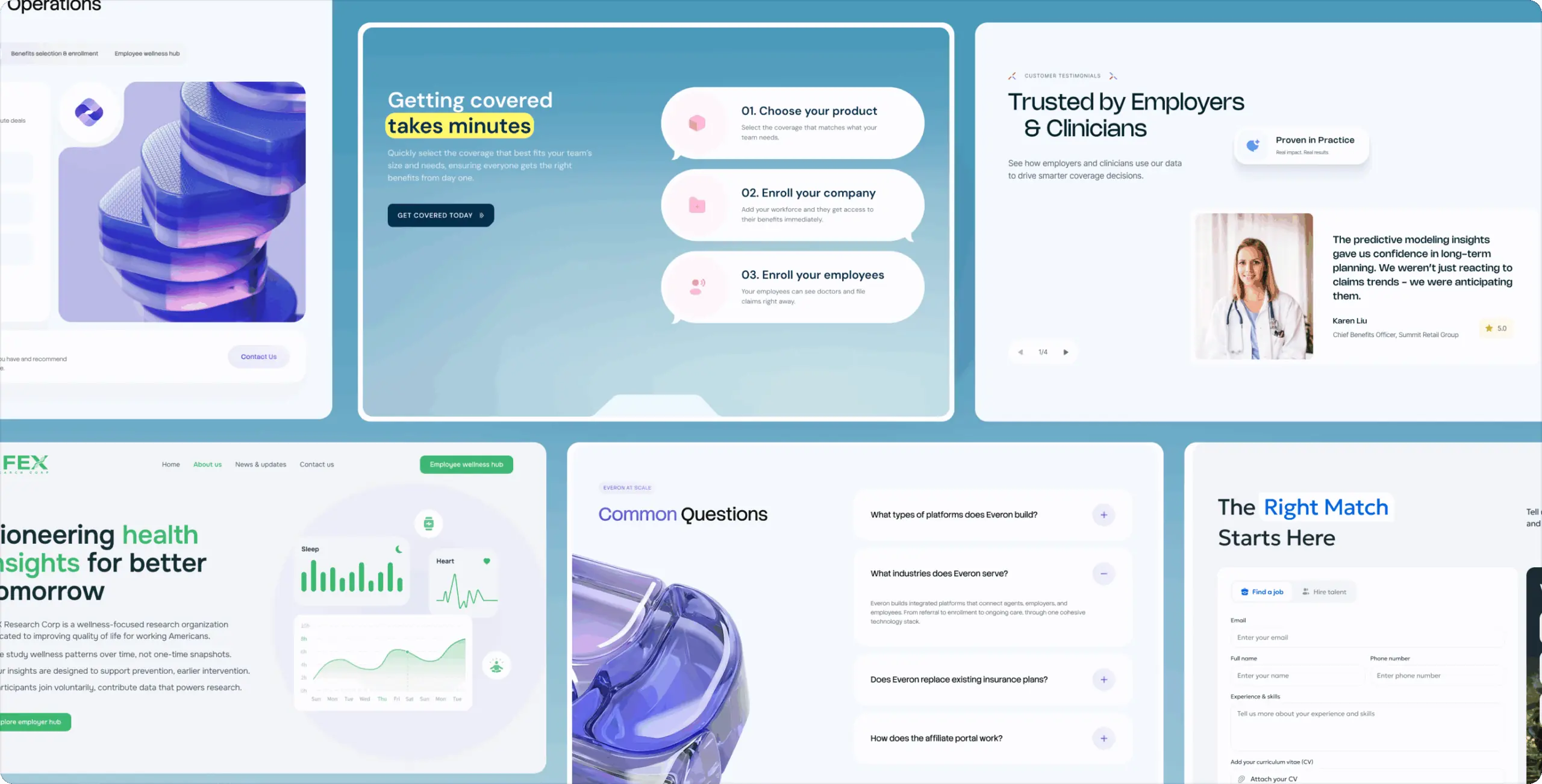
The scope included redesigning existing websites, launching new products from scratch, improving SEO and conversion performance, and creating scalable UX systems based on shared interaction patterns and proven user flows.
Depending on the business goals, some platforms required fully custom structures, multi-page architectures, AI-generated content systems, custom asset production, or complex documentation and affiliate experiences.
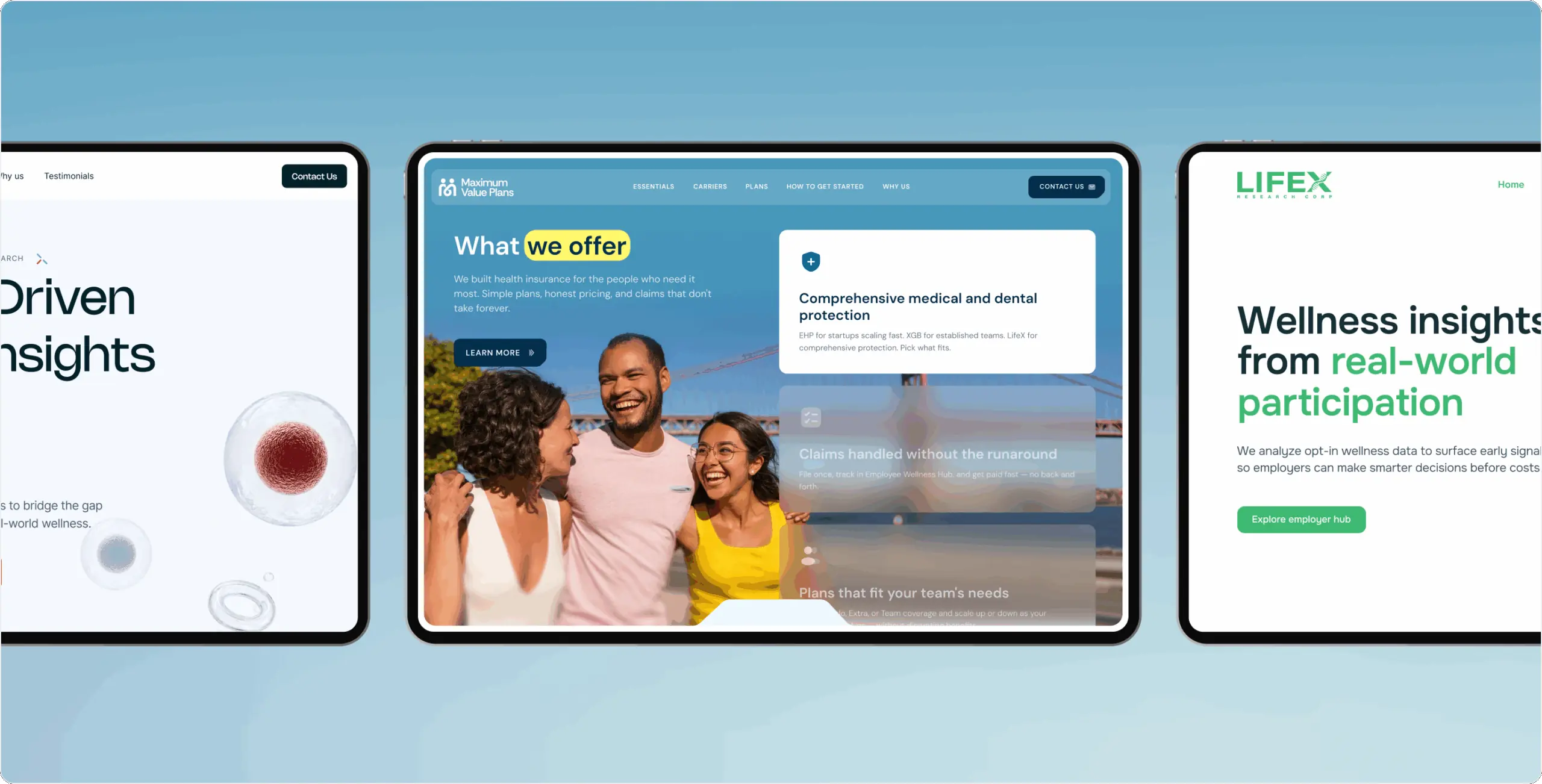
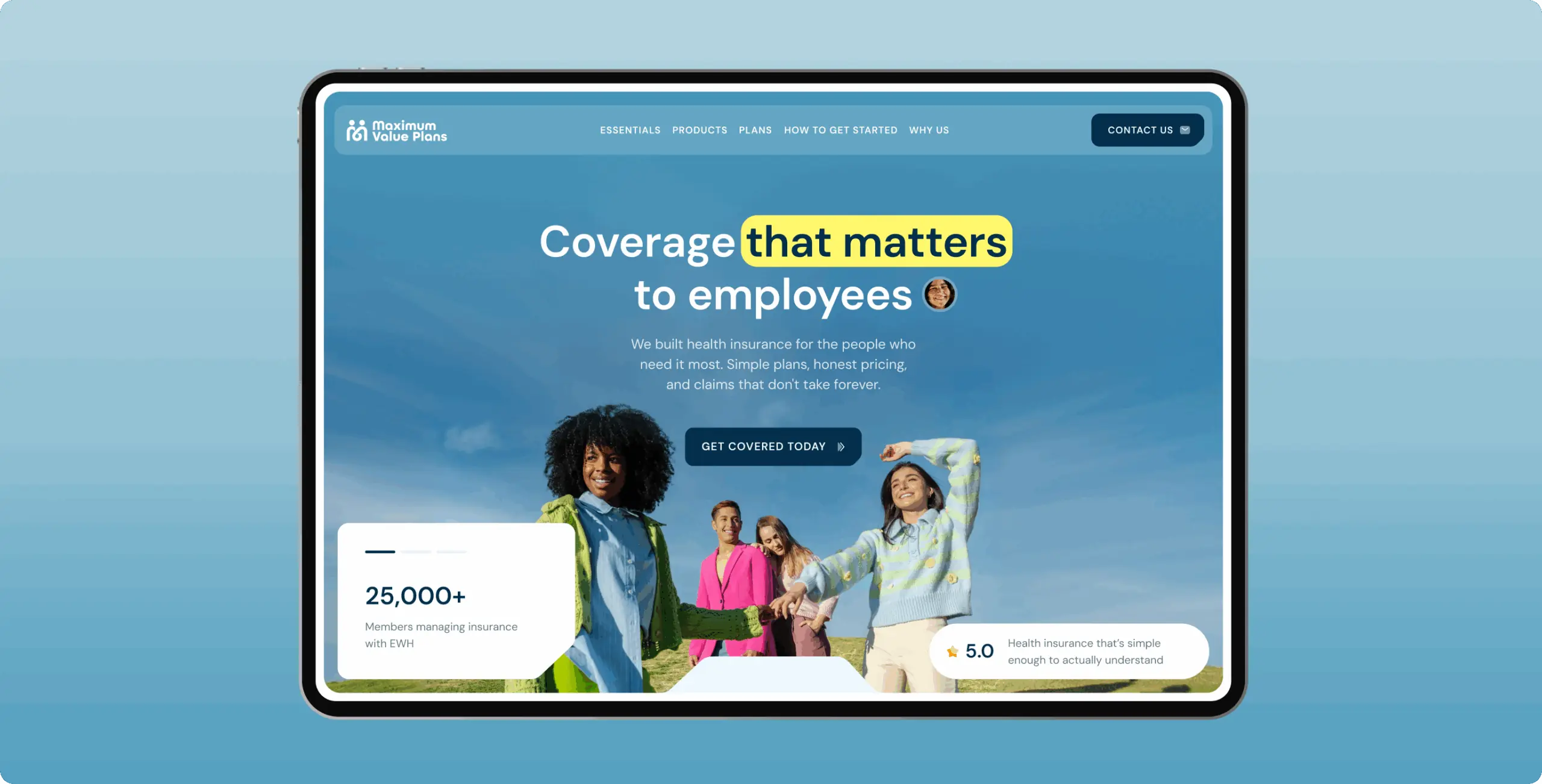
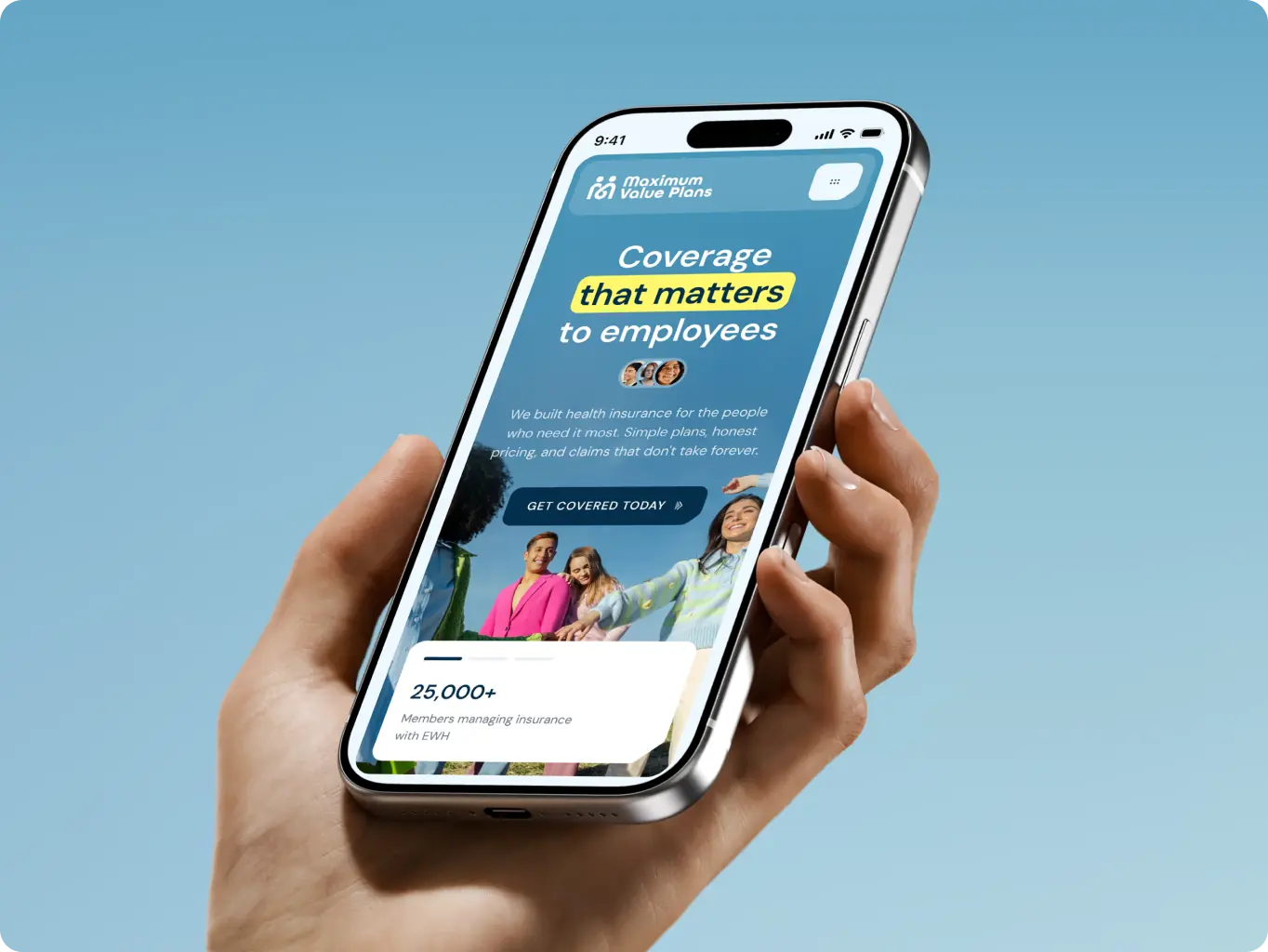
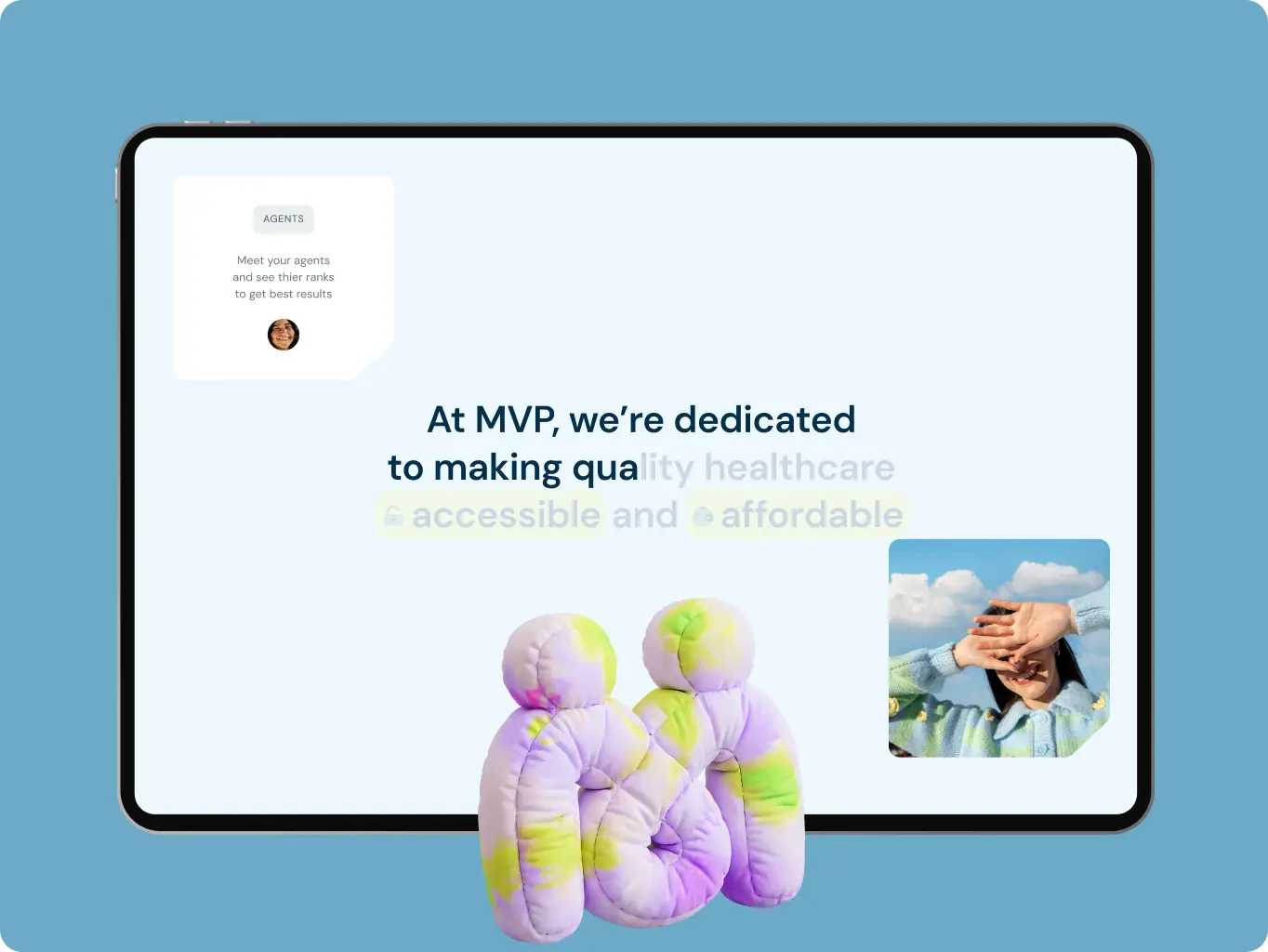
The MVP Plans (dev in progress) operates as a centralized insurance platform that aggregates multiple insurance products within a single ecosystem, helping users compare available plans faster and access transparent pricing without hidden fees.
The primary goal of the redesign was to transform the platform into a more effective conversion hub for EHP, XGB, and LifeX products while increasing quote requests from cold traffic.
The interface was restructured around clearer product segmentation, faster navigation, and a more intuitive user flow. The branding system was also partially updated through an expanded color palette, helping differentiate product categories and improve CTA visibility.
The redesign strengthened the perception of the platform as a unified product ecosystem, made the conversion flow more transparent, and supported lead generation through clearer structure and stronger service positioning.
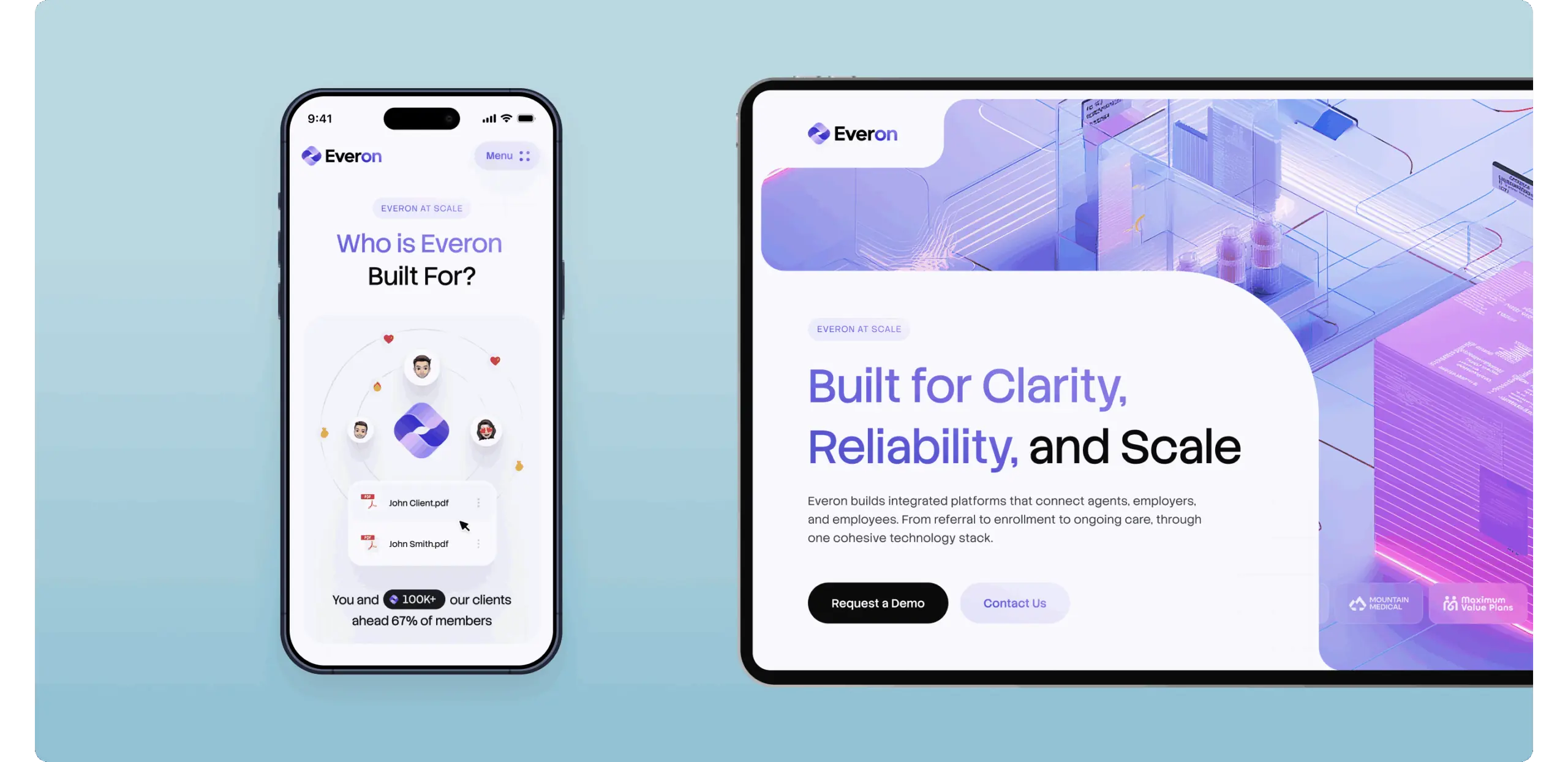
Everon Technologies was designed from scratch as the central technology layer connecting the entire ecosystem of the company’s products and services into one cohesive platform.
Unlike other brands within the group that solve isolated business tasks, Everon focuses on eliminating operational silos and creating a seamless flow between agent acquisition, internal operations, and employee insurance servicing.
The website was built with a mobile-first approach and structured around clearer ecosystem positioning, scalable navigation, and stronger communication of interconnected services. The visual direction was inspired by the Assetario branding system and adapted to support a more unified technology-focused identity.
The final solution helped position Everon as the operational backbone of the ecosystem, improved clarity across the company’s technology offering, and strengthened the perception of a connected end-to-end service infrastructure.
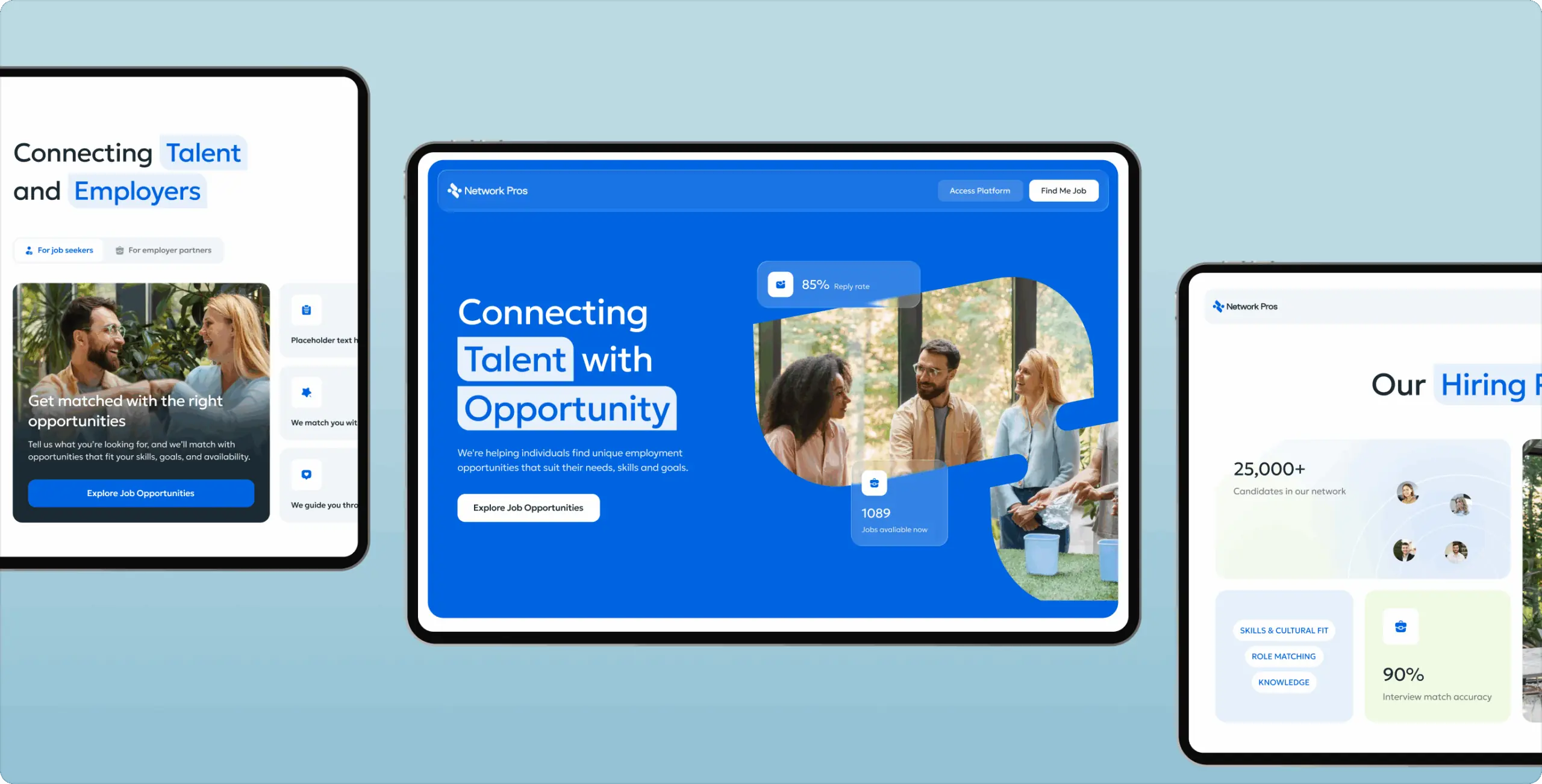
Network Pros Recruiting (dev in progress) is a recruitment platform focused on reducing hiring friction and accelerating candidate matching for employers.
The redesign aimed to improve how the company communicates its recruiting services, simplify the hiring journey, and increase inbound lead conversion from both employers and candidates.
The platform was restructured around clearer service segmentation, faster navigation, and more conversion-oriented user flows. Dynamic parallax interactions and AI-enhanced imagery were introduced to create a more differentiated digital experience without increasing production costs.
The redesign improved service visibility, strengthened the platform’s positioning in a competitive recruitment market, and supported higher conversion potential through a more structured hiring flow.
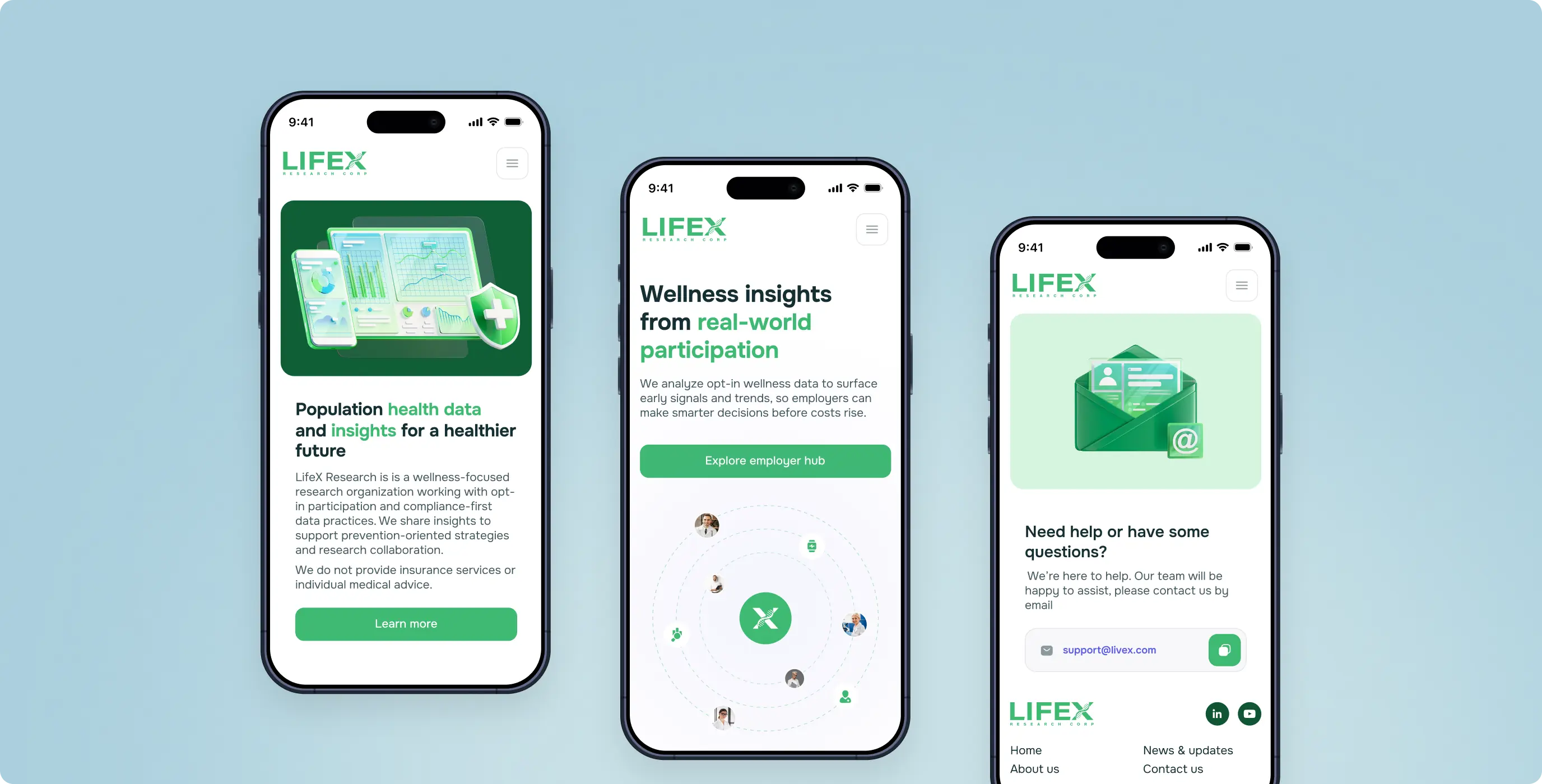
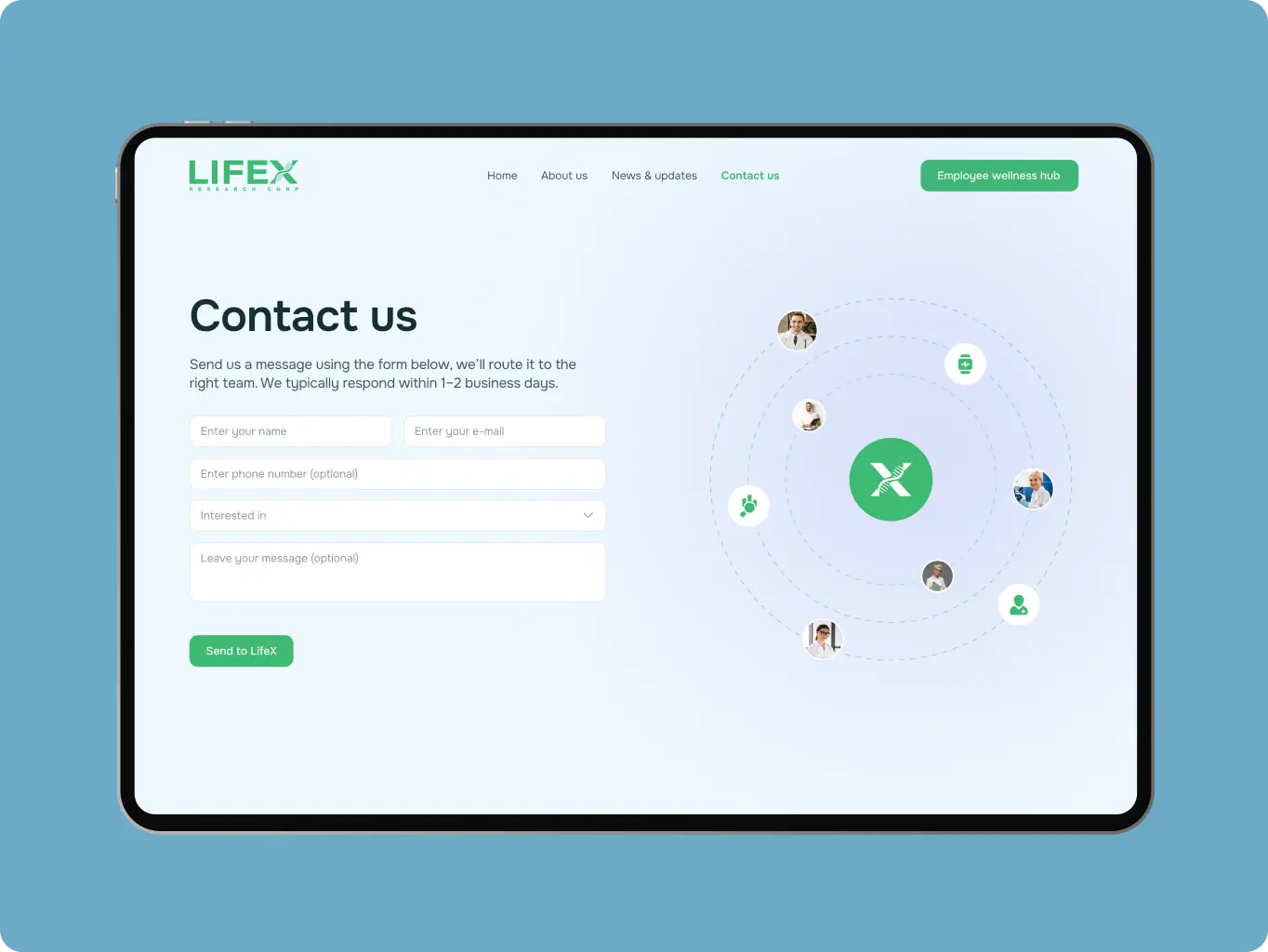
LifeX Research is a research and analytics platform that helps employers use wellness data to identify health risks earlier and make more informed insurance and workforce decisions.
The main goal of the redesign was to improve how research content is structured, increase visibility in search, and position the platform as a trusted source of wellness intelligence.
The website was rebuilt with a mobile-first approach and expanded into a scalable multi-page platform with dedicated sections for insights, articles, and company content. The interface prioritized clearer information architecture, faster content access, and improved readability for business audiences.
The redesign strengthened the platform’s authority, improved discoverability of research content, and supported long-term organic acquisition through a more scalable SEO-driven structure.
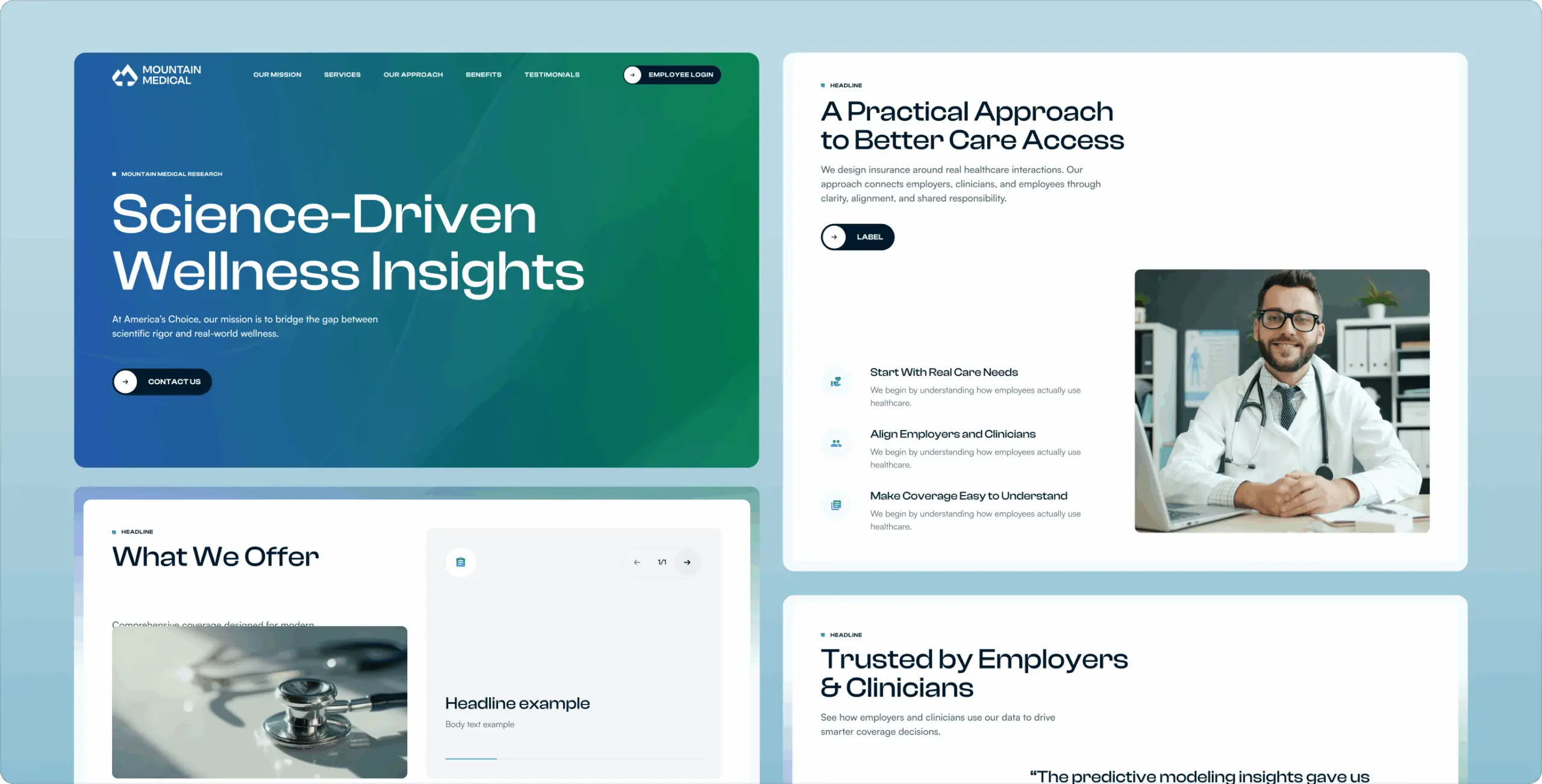
Mountain Medical Management (dev in progress) is a healthcare research and consulting company focused on predictive modeling, insurance analytics, and proactive wellness planning for businesses.
The company needed a clearer digital presence that could communicate its expertise in a highly technical and trust-driven industry. The previous positioning did not effectively explain the value of predictive healthcare analytics or support enterprise-level credibility during the evaluation process.
The updated website clarified service positioning, simplified access to core capabilities, and strengthened how the company presents research-driven solutions to potential partners. A streamlined template-based approach also reduced development time and operational costs, allowing the business to launch a scalable digital presence faster while improving lead qualification potential.
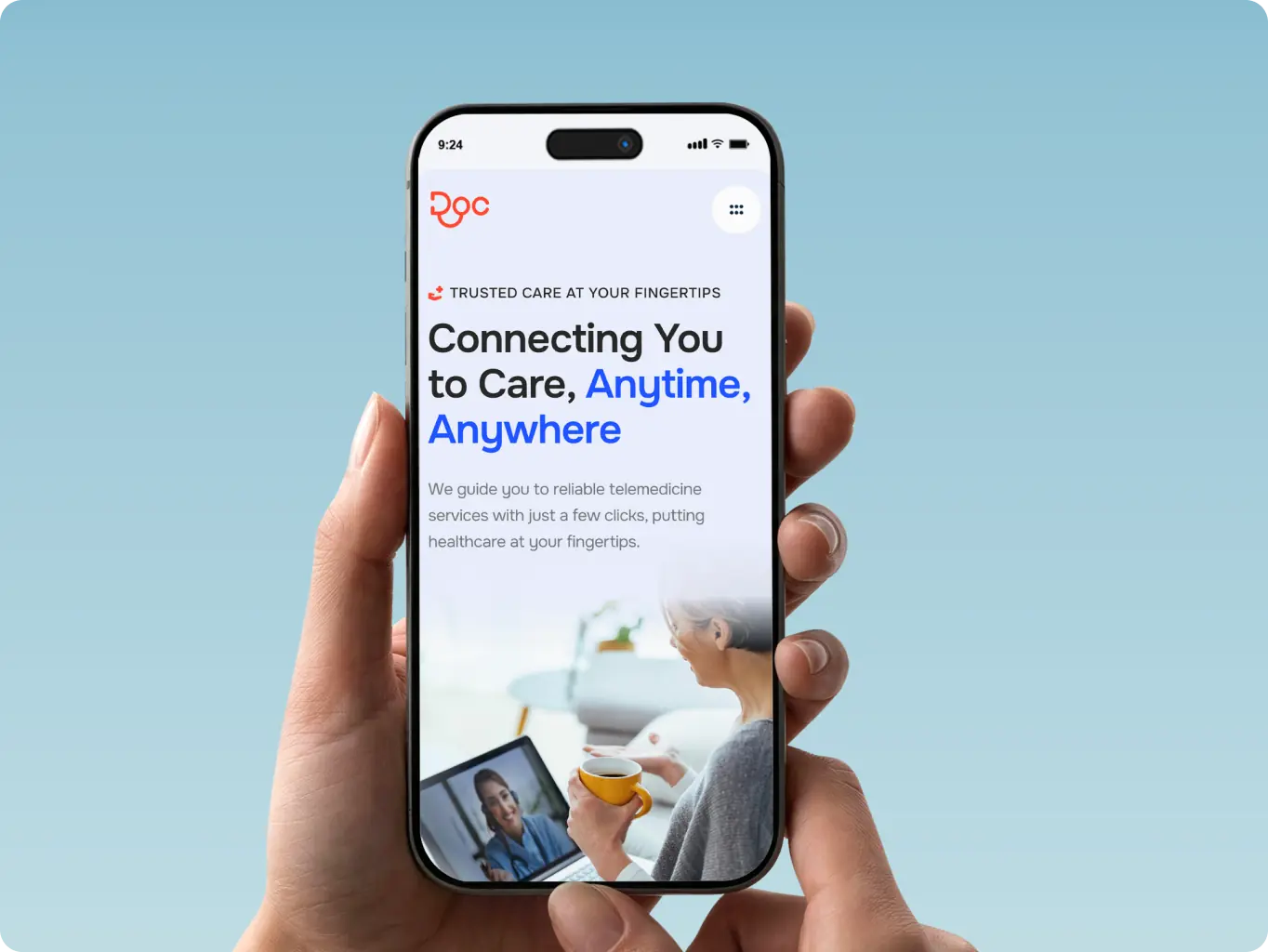
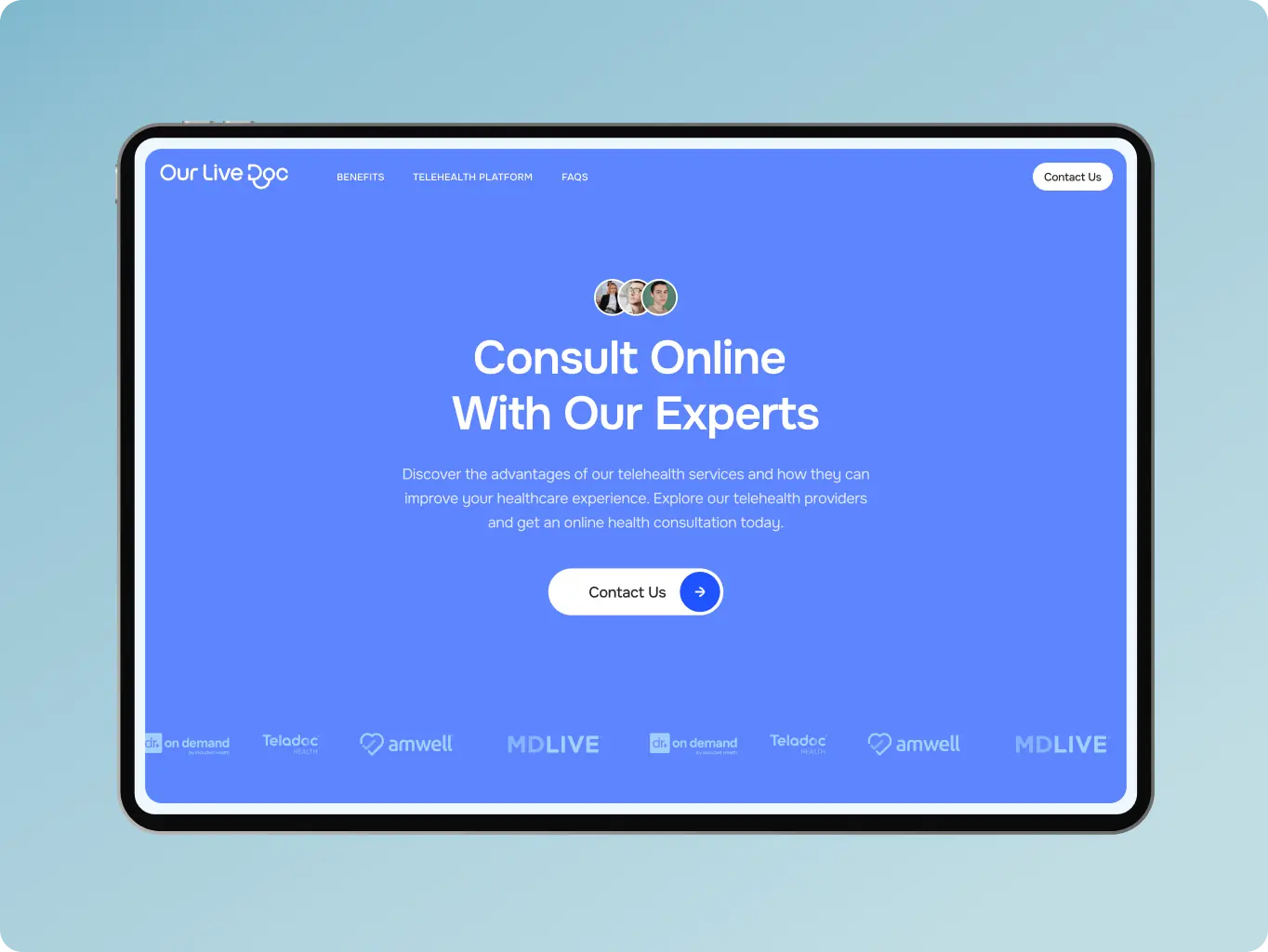
OurLiveDoc (dev in progress) connects patients with verified telemedicine providers across the US, delivering 24/7 access to online consultations. The existing site, built on a generic WordPress template, failed to reflect the updated Assetario brand identity and did not support the mobile-first patient journey — creating a credibility gap at the primary acquisition touchpoint.
The redesign realigned the site with OurLiveDoc’s brand system and restructured the user flow around one conversion path: from problem recognition to consultation request. Navigation was simplified to reduce decision friction, visual content repositioned to reinforce platform credibility. The result is a digital presence that builds trust at the top of the funnel, reduces mobile drop-off, and reflects the positioning of a verified telehealth gateway.
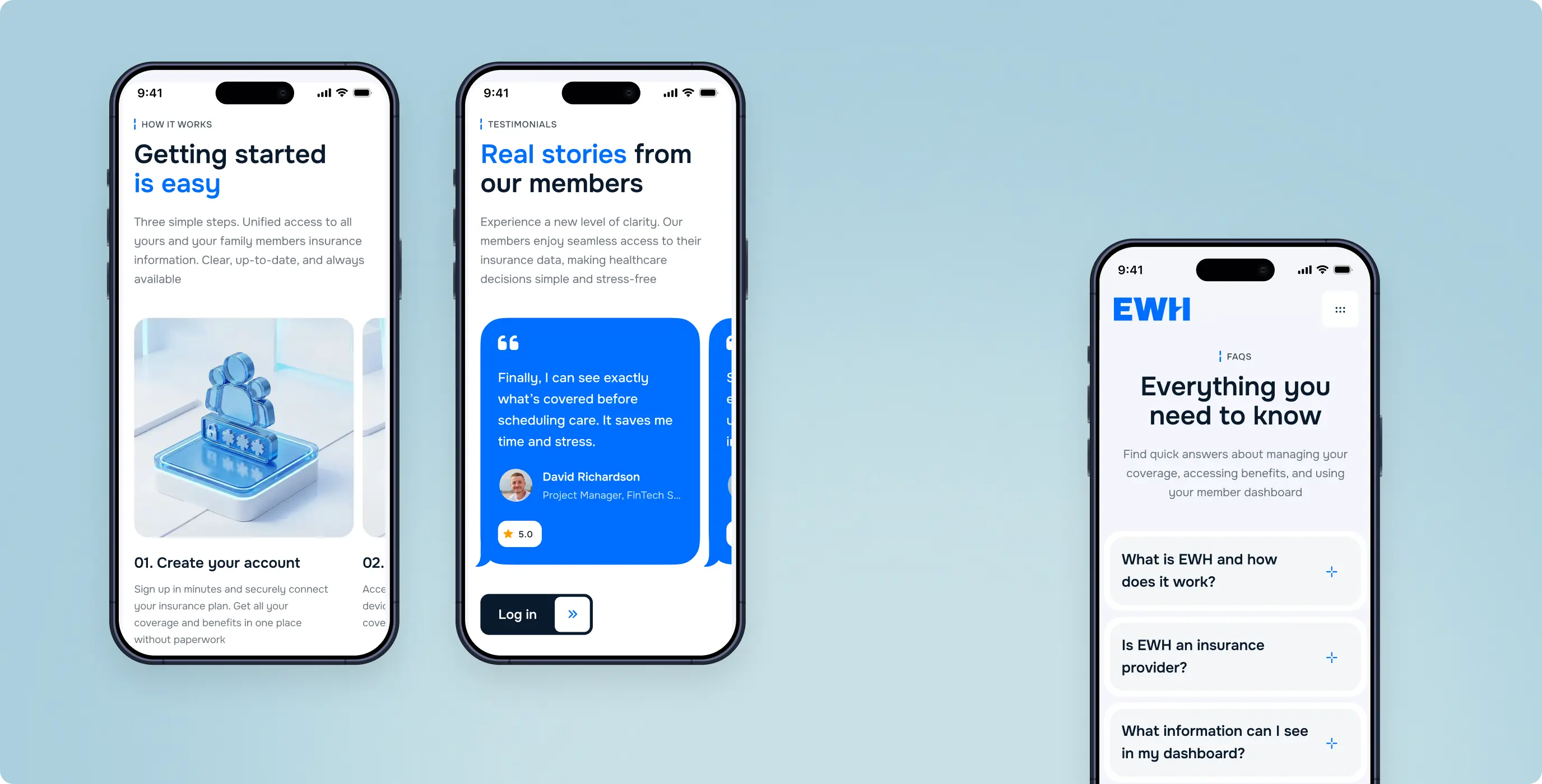
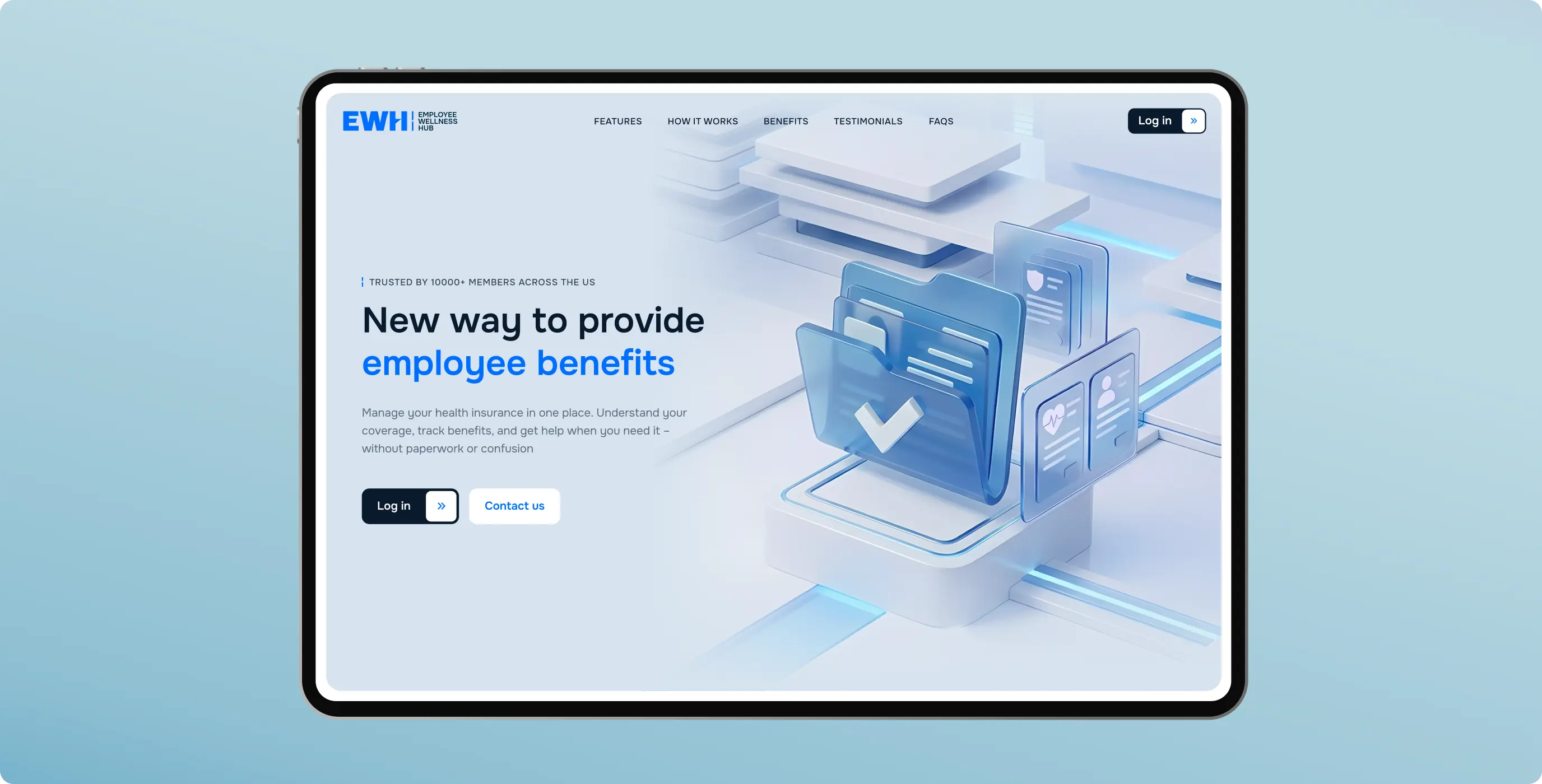
EWH needed a clearer and more accessible digital experience to improve how employees interact with insurance and wellness services. The redesigned platform reduced friction around complex insurance flows, helping users complete key actions faster and increasing the effectiveness of self-service support.
The new mobile-first structure improved engagement at the first stage of the customer journey and created a stronger foundation for user activation and retention. Clearer navigation and simplified content hierarchy helped make insurance information easier to understand, reducing dependency on manual support channels and improving overall platform usability.
The updated visual system also allowed the company to launch a distinct, scalable brand presence without high production overhead. By replacing generic stock-based visuals with custom assets, the platform strengthened brand differentiation while optimizing content production costs and scalability.
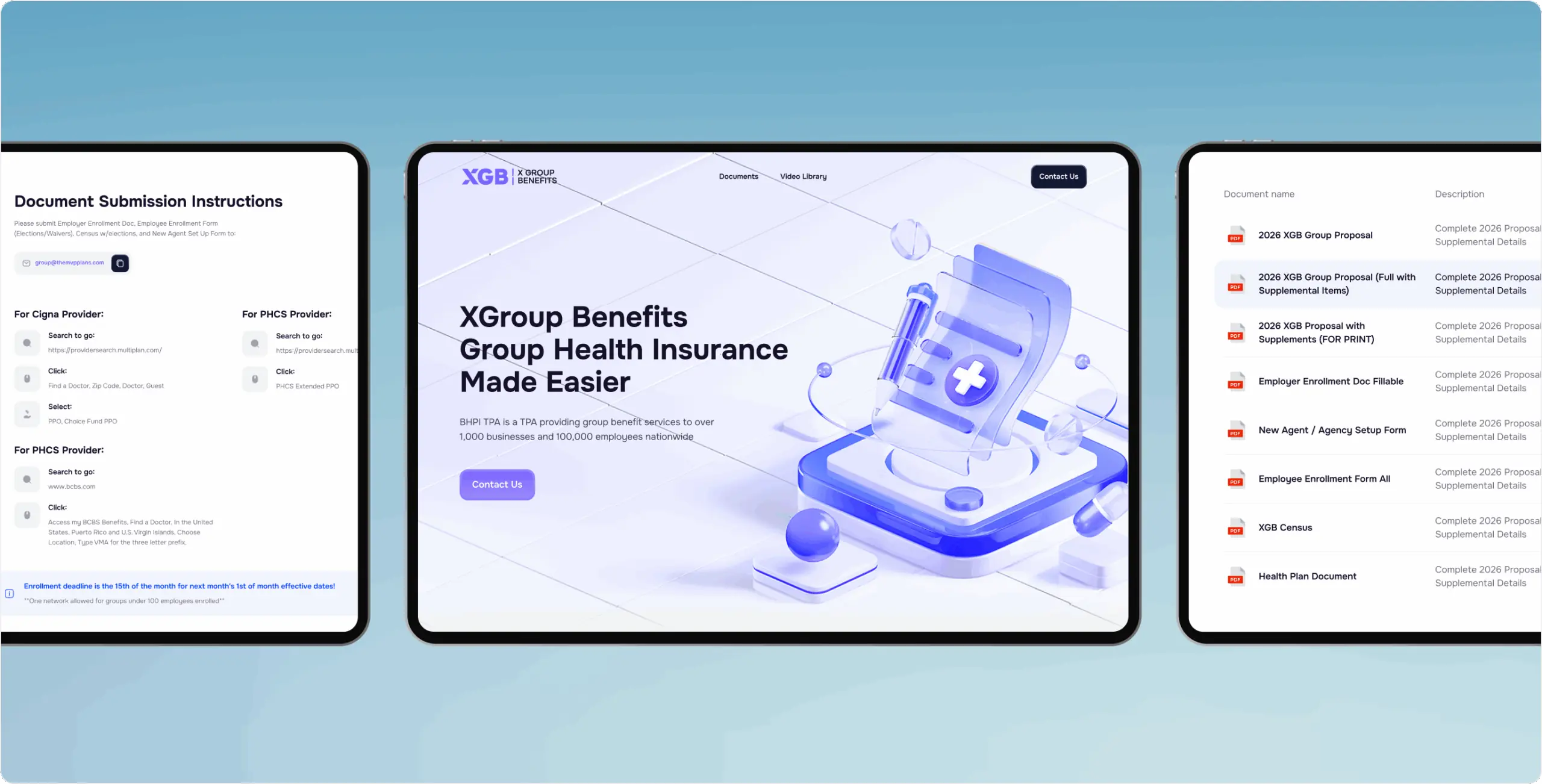
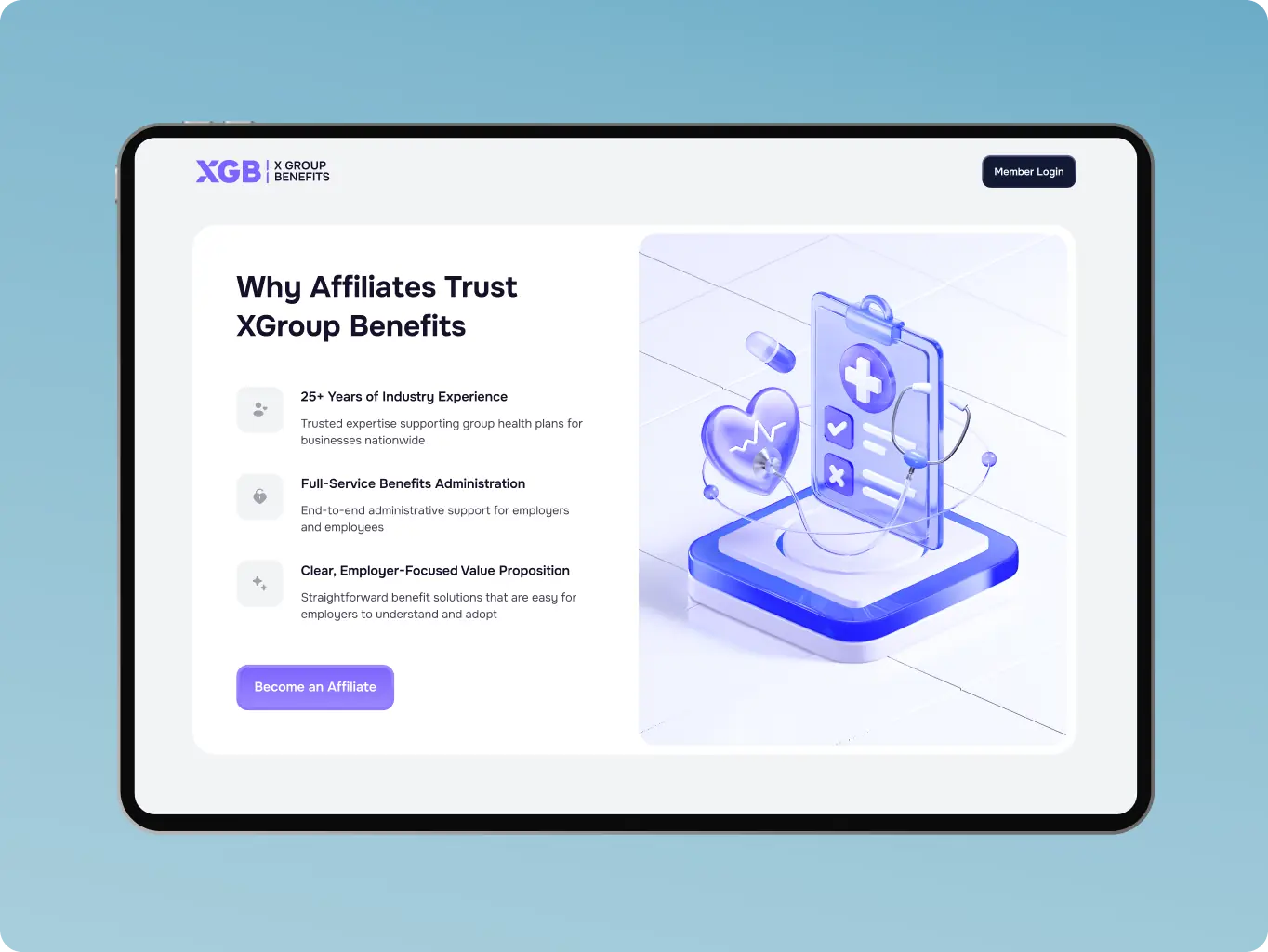
XGroup Benefits (dev in progress) is a large US-based insurance administrator serving more than 1,000 companies through group benefits and affiliate programs.
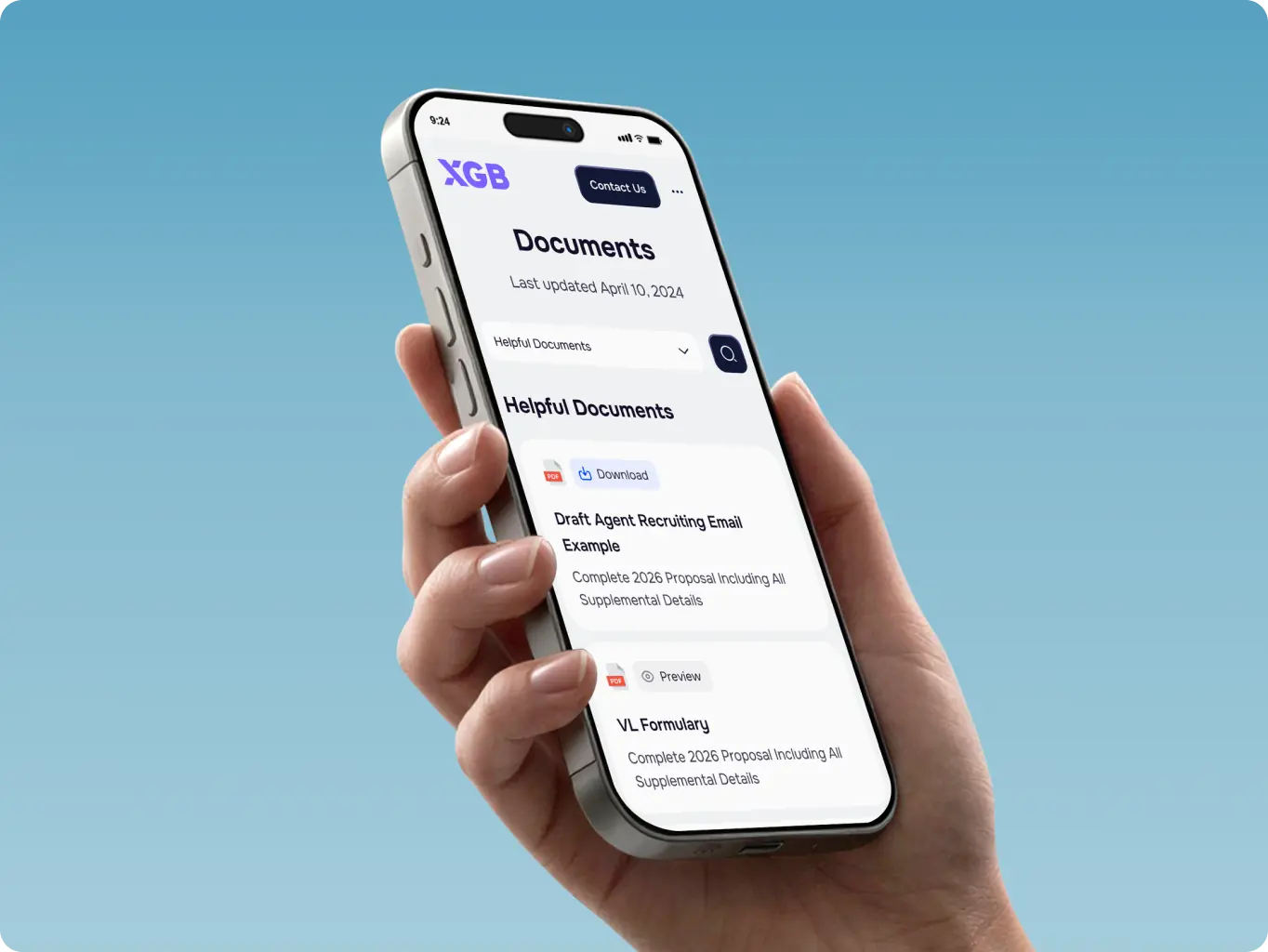
The company needed a scalable digital platform that could simplify complex insurance workflows for employers, affiliates, and end users. The previous experience lacked structure, making it difficult to navigate large volumes of educational, operational, and support content across multiple user groups.
We redesigned the platform with a mobile-first, multi-page architecture that unified documentation, educational videos, and affiliate resources into a single ecosystem. Improved information hierarchy, search, and content filtering reduced friction in finding critical information and made onboarding flows easier to navigate. This helped the business improve self-service efficiency, support faster partner activation, reduce dependency on manual support channels, and create a scalable infrastructure for future platform growth.
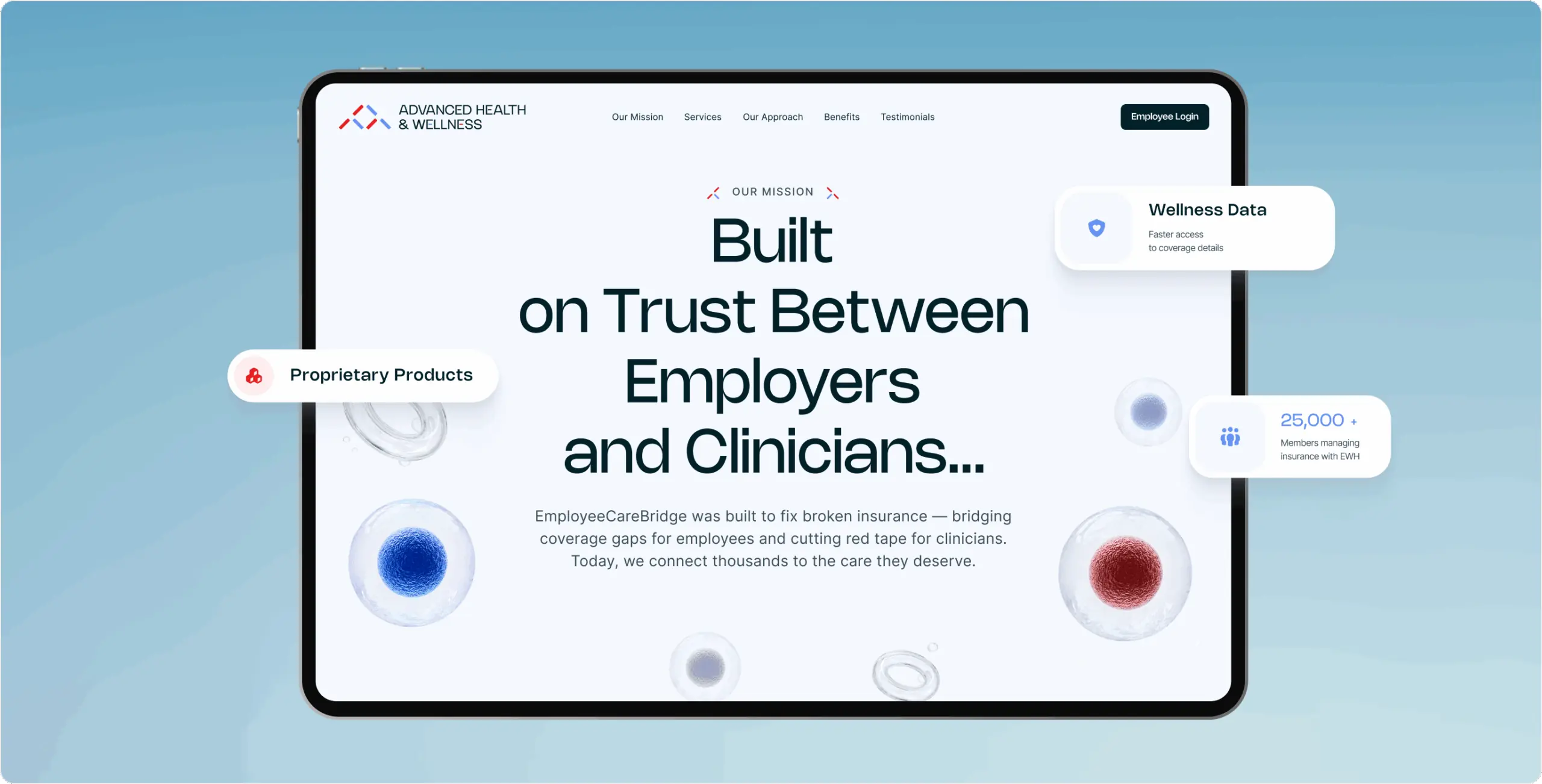
Advanced Health & Wellness is a research-focused organization specializing in preventive health analytics and data-driven wellness insights for businesses.
The company needed a complete digital foundation that could communicate scientific credibility and explain complex health analytics in a clear, accessible format. Since no existing website, structure, or content was available, the challenge was to build a scalable platform architecture that could support future business growth and establish trust with potential partners from the first interaction.
We created the platform from scratch using a structured enterprise-focused framework adapted to the client’s domain. AI-generated content and information architecture helped accelerate production while allowing the platform to launch with a consistent and professional positioning. The final result gave the business a scalable online presence, improved clarity around its preventive analytics offering, and created a stronger foundation for lead generation and long-term market positioning.
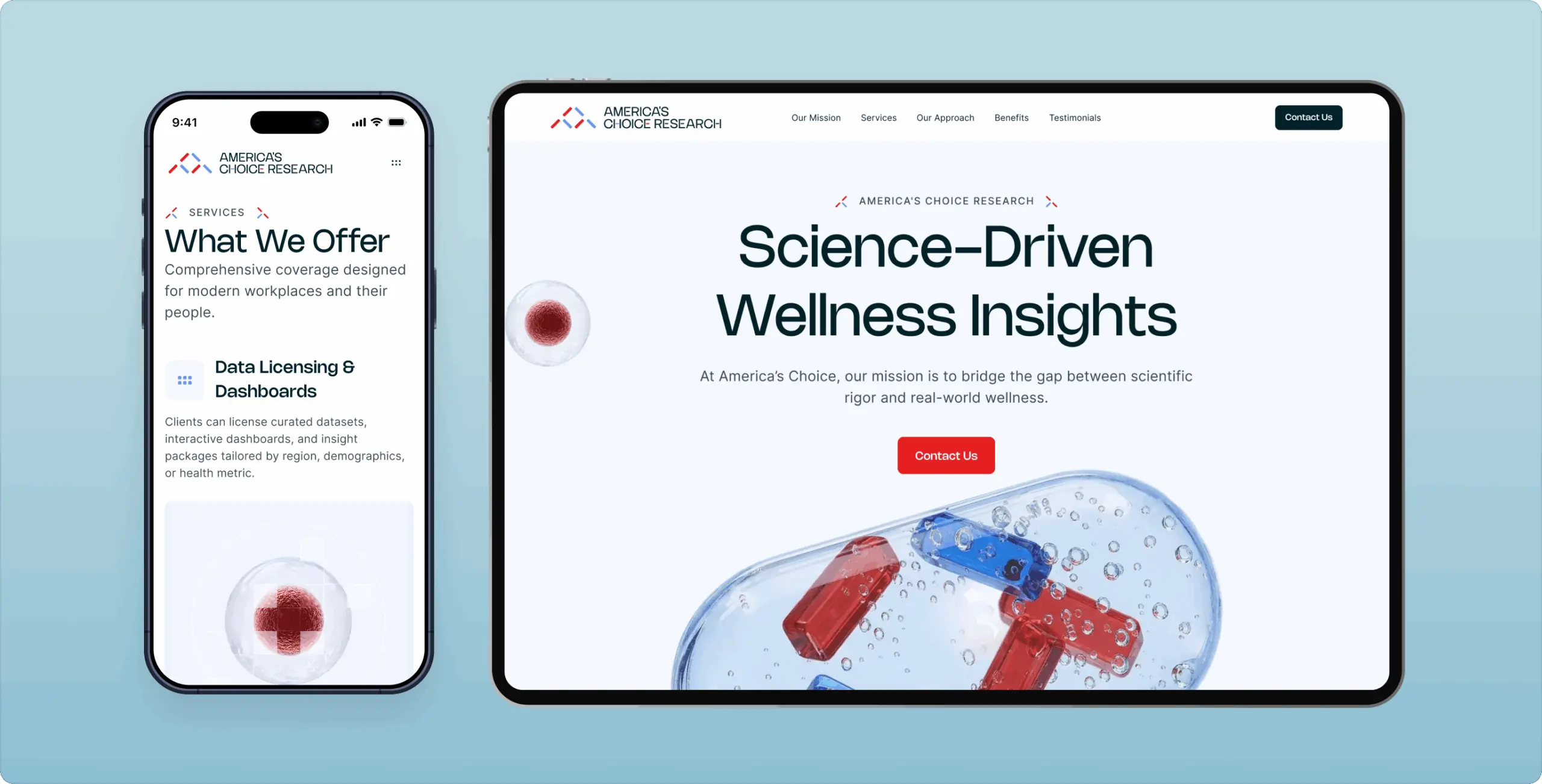
America’s Choice Research (dev in progress), under the EmployeeCareBridge brand, provides employers with predictive healthcare analytics and wellness intelligence designed to support long-term workforce planning.
The business needed to reposition itself from a traditional research-driven organization into a technology-oriented platform capable of attracting modern enterprise clients. The challenge was not only visual, but strategic: simplify communication around complex healthcare data while making the product feel actionable, scalable, and commercially relevant.
The redesigned platform introduced a more structured conversion flow, clearer service segmentation, and a stronger emphasis on interactive data tools instead of static reporting. This helped the company present its offering as an operational business solution rather than a consulting resource, improving market positioning, increasing conversion potential, and creating a reusable design framework for future product expansion.
All 10 websites were built on a shared component system, ensuring pixel-level consistency across brands without duplicating development effort.
Any UI update now propagates across the entire portfolio automatically — which meant a unified component library reduced development time for each new brand site by 40–60%. Each product launched with a production-ready UI kit, removing repetitive back-and-forth between design and dev.
Shared tokens and a documented component library meant developers worked from a single source of truth. The result: no mismatched buttons, no rogue font sizes — just consistent, predictable UI across all 10 products.

Webflow

Claude
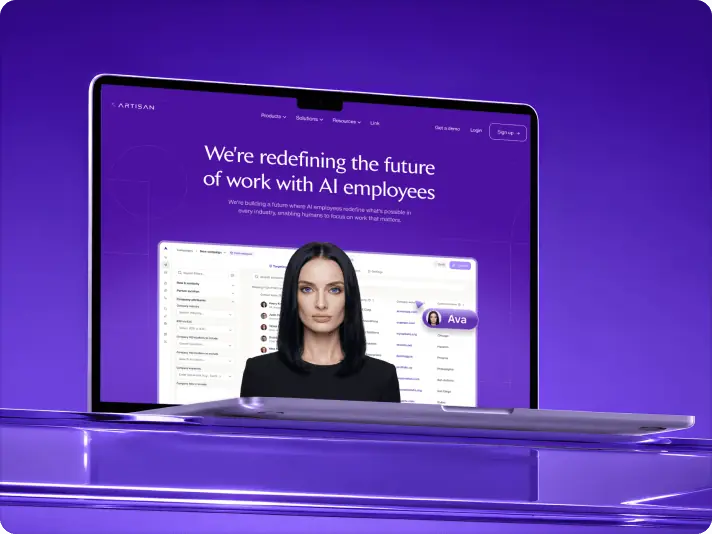
#Ux audit #website redesign
Artisan
USA
USA

#Website redesign #Website development
superantispyware
USA
USA
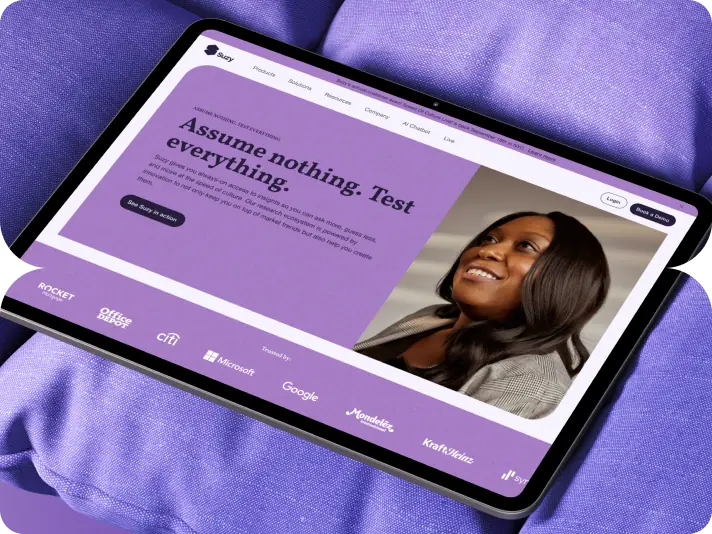
#Website redesign #Website Development
Suzy
 United States
United States
Have a project in mind?
Let's chat
Have a project to
discuss?
discuss?



Have a partnership in
mind?
mind?